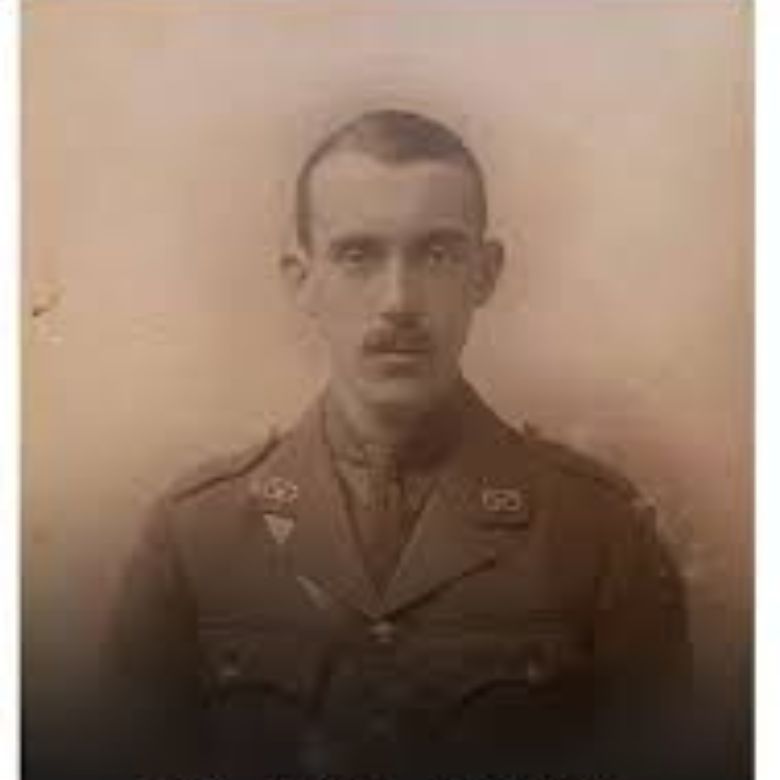
Fitzpatrick, or “Fitz” as he was known, was commissioned into South Staffordshire Regt in 1914, serving with the 3rd Battalion during World War One. Transferred to the Indian Army’s 14th Punjab Regiment after the war, subsequent to its return from Palestine in 1923, he was posted to its 1st Battalion, the “Sherdils” and served with them throughout. Devoted and popular, he became the Commanding Officer in 1940 and took the battalion to Malaya in March 1941, part of the 11th Indian Infantry Division tasked with defending the north-west bordering Thailand from an expected Japanese invasion.
The comparatively halcyon months that followed included training and fraternising with the local Volunteers through hockey matches and dinners. Meanwhile plans were drawn up – Operation Matador – to stop the Japanese on the beaches of southern Thailand where they expected to land. For this to work they had to be there before they arrived, which meant invading Thailand before the Japanese did. After much dithering, this plan was cancelled as we will see.
Fitz records that: “On 8 December 1941 at Tanjong Pau 0315 hours, orders were received for scheme Matador to operate. By 0630 hours the battalion had arrived at Anak Bugit Railway Station where the Leicesters were already entrained. Battalion was dispersed in slit trenches pending the arrival of its train”. After waiting almost all day, “at about 1600 hours orders were received to return to Tanjong Pau” and, once the battalion marched back, Fitzpatrick “was informed that scheme Matador was off and the Jitra position was to be held”.
Jitra was a position south of the border that had been readied for defence, but the Japanese advance was so swift that, at Changlun, north of Jitra, Fitz’s battalion was broken in two by an attack by tanks. Confusion reigned and Fitz, wounded, was cut off. Stumbling around in the jungle, he came across some of his battalion mates, including his HQ Company Commander Capt. Mohan Singh. On December 15, 1941 they surrendered to the Japanese and Fitz was immediately segregated from his Indian men. For the Japanese had made a pre-war alliance with Indian nationalists to recruit an Indian National Army (INA) from these troops to invade India, and needed to keep them apart from their British officers.
In the town of Alor Star, Fitz was interrogated by the Japanese and, when he refused to divulge information, was himself segregated from the other Britons captured. In an incredible wartime survival, he described what happened to him in a pencilled note. Through the bars of his window, he saw Lt R Longwill on his knees, trussed up with ropes tying him to a tree – Longwill later told him he had his head plunged repeatedly into a bucket of water to force him to talk. Fitz spent time in various POW camps in Malaya during 1942, finally reaching Changi POW camp on Singapore Island on 2 December 1942.
There, British officers of the Indian army were billeted together. In another incredible wartime survival as it was misfiled, Fitz is listed as the senior most. There were two others senior to him but not present there. Most were not sent on work fatigues in Singapore to prevent contact with Indian troops. Aided by an intelligence network run by Major Sawyer of 22 Mountain (Artillery) Regiment, they were kept abreast of what was happening in the Indian Army. They knew that the INA had been formed, commanded by now General Mohan Singh, and the monitoring of its activities and who had joined was the main preoccupation of Fitz’s small group of officers. In 1943 began what Fitz later called the Passive phase, when they made plans about what to do when liberation approached and after. This was kept to just two or three senior officers and was withheld not only from the Japanese but also from British HQ in Changi as making such plans was forbidden. POW life continued, with a big change in May 1944 when Fitz’s officers were moved to the actual Changi Gaol within the broader Changi area where they had been so far.
The Semi-Active phase began when they heard of Germany’s surrender in May 1945. Now more detailed orders were issued with more officers informed of their tasks. This was to start in the Active phase when the war was over. They had not considered the possibility that the Japanese in Singapore would refuse to surrender, which indeed had been the intention of the local commander till he was ordered to follow Emperor Hirohito’s acceptance of the Potsdam Declaration and lay down arms. Perhaps unknown to Fitz at that time, one night 300 Japanese officers, rather than surrender, blew themselves up with grenades after a sake party.
In the event the Japanese withdrew from Singapore before the Allies arrived, they made plans to maintain law and order using Indian troops on the island. As it happened, the Japanese remained and, on 5 September 1945, surrendered to the Indian Army that liberated the island.
The main preoccupation and worry of Fitz’s team was how to manage the INA soldiers. After Japan’s surrender, the local civilians who had joined, melted back home. There were Indian POWs in over 20 camps spread across the island with between 50 and 2,000 men in each. The easier part to handle was the INA camp itself at Bidadari with 2-3,000 former Indian Army men. However, spread out in the other camps were Indian soldiers who had been Changi guards, drivers, mechanics and gunners who had worked for the Japanese and considered collaborators.
Fitz had approached Lt Col de Wilton who was senior to him but had been sick for a long time and not earlier privy to the plans made for the Indian Army after liberation. Interestingly, he first said that, given the political situation in India, investigation of loyalty should be done by Indians under an Indian civil judge, but eventually agreed this should be carried out as planned, initially by British officers in Singapore. On 23 August 1945, Fitz issued instructions to British officers that when meeting their men, they must not give any indication of future treatment. This was done as who had been loyal and who had not was still unknown.
Two days after liberation by the Indian Army that had sailed from Rangoon, Lt Col de Wilton who now had taken over from Fitz as the senior most British officer of the Indian Army, wrote to those responsible for the management of POWs of what was going on in the Indian POW camps. Amongst those who had remained loyal, he said “Feeling in the camp is running very high”. As they were mixed up with many fellow Indian soldiers considered collaborators, they were asking ‘when are we going to be separated from these traitors?’”. Wilton said that it was no exaggeration that some of the INA men had ill-treated the others. He added the “Sorting out of loyalties brooks no delay” and that this was vital for the future of the Indian Army. Little did he know, or for that matter, anyone else all the way up to the King, Prime Minister Attlee and Indian political leaders, that, in less than two years, India was to be free, and, in fact, in just a few months from then, the INA would be feted as heroes by the people of India.
Both de Wilton and Fitz protested strongly against the plan of the immediate repatriation of all Britons back home, saying that they should instead return to India with their men to counter the propaganda that the British had deserted them and restricted access to Red Cross parcel.
Meanwhile, what had Fitz’s family known of his fate? The lack of knowledge on both sides of how they were and what they knew is one of the hardest aspects of war, and the effect this had on morale and well-being cannot be exaggerated. On 9 January 1942, Fitz’s wife Phoebe received a telegram informing her that he had been missing since 11 December 1941 (the day of the Japanese attack on his battalion). On 17 September 1942, she got a letter from the India Office in London that he was in a POW camp in Kuala Lumpur, adding that he had been wounded, but had recovered by now. Sometime in 1944, Fitz was “delighted to get your postcards of February” as he wrote in a return postcard dated 9 August 1944 that the family did get. Finally, on 24 September 1945, the family received a telegram that he had been liberated.
In family letters exchanged immediately after the war, we can trace his next few weeks. Fitz had had his way and returned to India with his men. On 7 September 1945, from Singapore, he writes to Phoebe saying that he “expects to go back with the troops to India & and then get leave before putting on my bowler hat…”.
A week later, on 16 September 1945, on board a ship from Singapore to India he writes to his daughter Ann that he was very lucky before leaving Singapore to have the opportunity of attending the Japanese surrender ceremony taken by Lord Louis Mountbatten (on 12 September).
In a letter also dated 16 September, ‘C/O Recovered POW Centre, Bombay, India Command’, he writes “ever since I was captured and whilst still a prisoner, I always had a lot of work to do and since the peace until I sailed I was very busy indeed in connection with the Indian troops who were also POWs – so I am quite enjoying a rest on this ship”.
On 21 September, he writes to his wife from Madras, noting he has things to sort out and states that the Indian army cut their pay by 25% when they were prisoners. He writes about meeting Pigot to find out what will happen after his leave in England – he says “the people dealing with me here merely insist that I return to India on completion of my leave – what for what as I want to know….”
On 30 September, now in Lahore, he also writes to Ann that, from Madras, he went to (what looks like!) Ferozepore to get his old clothes – but the moths had “had a bit of a feed on some of them”. He writes that he is going to Kalyan transit camp – from where he will board a ship to England – and he hopes to be back in England in the last week of October and in time for her 15th birthday on 11 November, talking of the sweet little girl he left behind in 1939. He says he will have a full three months in England.
On 11 October, on board SS Johan Van Oldenbarnevelt, Fitz is in a dormitory with 16 others – breakfast at 7, dine at 6pm” – he thinks they will not land before 1 November. Plans to return to India after his leave were overtaken by political events and Fitz did not go back.
In his long military career, he was mentioned in despatches in 1917 during World War I, in 1939 for services on the Northwest Frontier and in 1946 for “adversity in captivity”. He died at home on 7 November, 1973.
NB: A special thank you to Fitz’s grandson Alan Macdonald for access to a treasure trove of family records.
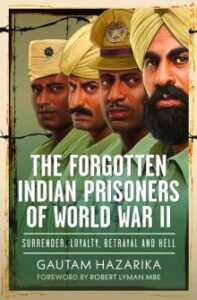
Gautam Hazarika is Singapore-based historian of World War 2 and is the author of The Forgotten Indian Prisoners of World War II: Surrender, Loyalty, Betrayal & Hell.