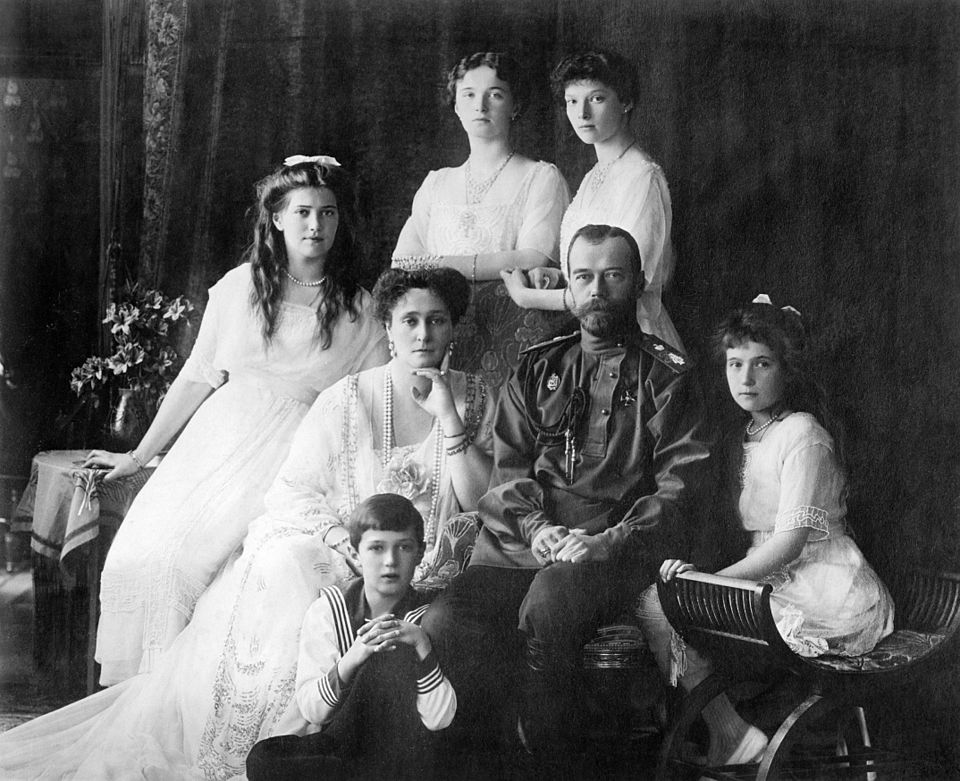
Almost as feted a family as the Tudors, the name conjures images of decadent royal Russia, of grizzled Siberian sorcerers and beautiful princesses (or grand duchesses), bejewelled palaces and icy, splendid St Petersburg. Although their reign spanned some several centuries, the majority of the work dedicated to Russia’s royal family centres on the lives of the dynasty’s final incumbents, Nicholas and Alexandra. With their haemophiliac son and their seeming inability to rule a rapidly changing country with any real political nous, their savage deaths have nevertheless given them the tarnished but marketable glamour of an Anne Boleyn or a Mary Queen of Scots. I always considered Tsarina Alexandra much endowed with the mettle of the aforementioned Scots queen, of whom Alexandra’s grandmother – Queen Victoria – was so very enamoured. It was Alexandra who held the fort at the Romanov family home – the Alexander Palace – as the Russian Revolution erupted in nearby St Petersburg. She alone represented the Romanov crown when it came to confronting vengeful insurgents, this whilst her husband the Tsar was away serving as a figurehead for troops in World War One. I’d touched upon her pluck and her poise in my previous book, Rasputin and his Russian Queen, but knew even then that I wasn’t done with her. There is simply so much more to Alexandra Feodorovna.
People venerate Anne Boleyn because only fragmentary evidence exists to demonstrate what she was really like, leaving us to make our own judgements and construct her as we wish. With Alexandra existing so close to us in time, and with a wealth of her correspondence and official documents at hand, the picture is much clearer, but some love her the less for it. We are privy to all her flaws; we see her obstinacy and her inability to judge the mood of the Russian people effectively. We see her dogged, overprotective diligence in guarding her four girls from what she saw as the corrupting influence of an admittedly rather decadent St Petersburg. But episodes such as the aforementioned siege of the Alexander Palace show us the steel beneath the stubbornness; still reeling from the murder of Rasputin, the one man who could effectively – and mysteriously – stymie her son’s haemophiliac episodes, she nevertheless refuses to back down in the face of almost impossible and often highly intimidating odds. I for one will always love the image of her stepping outside the safety of the palace walls in the dead of night, hoping her presence might fortify the troops still loyal to the crown, with her daughter Maris following in her wake. Down line after line of cold and weary men she went, nodding and smiling, offering words of reassurance to soldiers who knew very well that a mob was approaching which might very well tear them limb from limb. And when that mob did indeed reach her own door, still Alexandra did not baulk.
What a woman! What a queen!
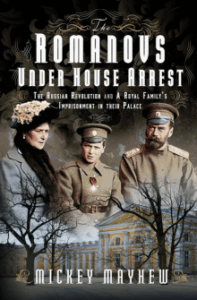
Mickey Mayhew is an historian and the author of The Romanovs Under House Arrest: The Russian Revolution and A Royal Family’s Imprisonment in their Palace.