
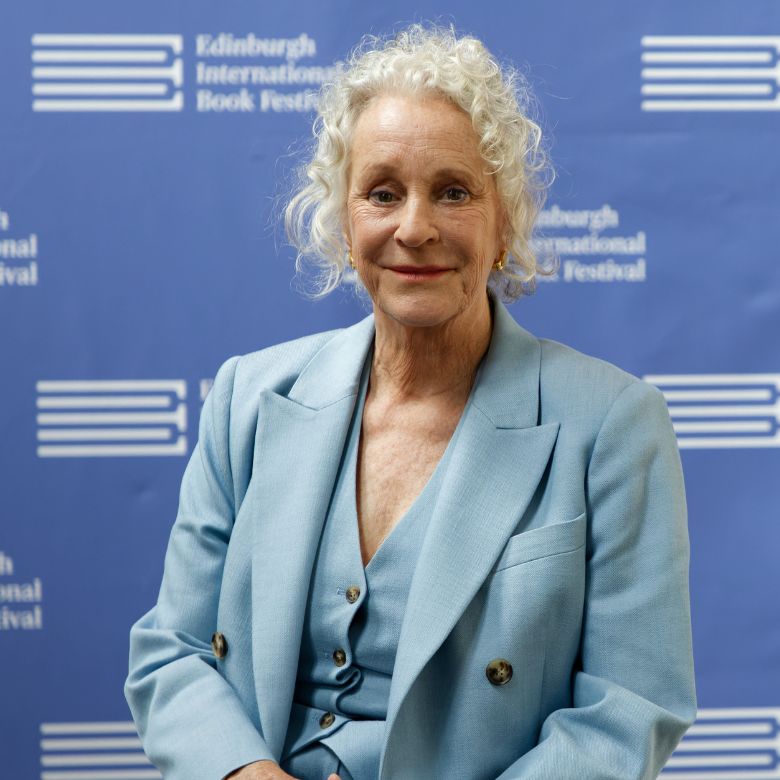
Welcome to Aspects of History, Philippa. Thanks so much for agreeing to this interview. I thoroughly enjoyed The Boleyn Traitor! Firstly, I’m curious as to your thoughts on why the Tudors, unlike other dynasties – the Stuarts or the Georgians – seem to have such a big following, particularly in the USA. What is it about Henry and his court?
It’s such a colourful period in our history. It’s got everything we want – drama, intrigue, and high stakes. Henry starts life as this promising, handsome prince and ends up, probably, the worst tyrant that we’ve ever had in England. He’s a wife abuser, he’s a serial killer – I think he’s a psychopath – and yet he still taught in schools rather comical, eccentric character who just happened to have a lot of wives. He’s this very big (in every sense of the word) figure at the head of a court which is – for first time – being centralised. It’s also a renaissance which gives us this background of rich culture, music, art, literature and poetry and at the same time we have great religious change. It’s a period of dramatic change for everyone but especially for women.
Having visited the Henrician court a few times now, do you find it gets easier or more difficult to spend time with these people and to conjure up that world?
I’ve been working on the Tudors for so long they are like old friends to me. I know about their lives, the lives of the children, their great successes and their losses. I remember writing The Boleyn Inheritance back in 2006 and there’s scene when Catherine Carey (Mary Boleyn’s daughter) comes to court and I was so pleased to see her – I wanted to say: ‘I knew your mother well’. It’s been really inspirational to return to the Tudor court and study the new research. We now have new medical research on Tudor diseases and genetic conditions, and a new understanding of the psychology of royals – and their mood swings! For this book especially, some fascinating new work suggests that the better-known spycraft of the Elizabethan court was actually inherited from the Tudors and Henry’s great advisor, Thomas Cromwell, set up a far-reaching international information-gathering service.
Boleyn Traitor is my first novel since writing Normal Women: 900 Years of Making History, an exploration of how women’s history is missing from what we read as complete history books. It taught me the importance of women in the past and the tendency to ignore them, or demonise them. And I wanted to return to the Tudors to interrogate the reputation of Jane Boleyn, who is known as England’s most hated lady-in-waiting. Like so many other women – her story is not quite as it seems and I don’t think I’ve been fair to Jane in the past.
When we last spoke, you mentioned what you called the ‘take-off moment’ when writing: that moment when everything clicks and the story and characters come together. When did you feel that with The Boleyn Traitor – was it in any particular scene?
There was a great moment in this research which came about during my investigations into Jane’s father. She’s the daughter of Henry Parker, Lord Morley, who was a very minor courtier – you hardly ever hear about him, but he was a scholar, and he came to Henry’s court with copies of translations. I found a very old book of essays, out of print now, but it shows the list of the gifts that Lord Morley gave to Henry VIII at his New Year celebrations. His main work was translating the Italian renaissance texts which he gave as gifts to Lady Mary, Henry VIII’s daughter, and always to Henry VIII himself. This was really inspiring to me, and it meant that I could imagine Jane as a scholarly daughter of a highly scholarly man, a bit like Margaret Roper who was the daughter of Sir Thomas Moore. Interestingly, Jane’s father translated the philosopher Niccolo Machiavelli’s book The Prince, a book which explains how any man who wants power must become a tyrant, and how to do that. And he gave it to Thomas Cromwell.
Non-fiction writing very often involves speculating – based on whichever threads or scraps of evidence remain – about historical figures’ motivations. In the novel, you do exactly this, taking known facts from Jane Lady Rochford’s history (her endowing of educational causes close to her scholarly father’s heart indicating her own intelligence; her dismissal from court for intriguing against a mistress of Henry’s) and imagining how these indicators of personality might explain her actions. Do you find the freedom of creative writing allows you to explore these characters in ways non-fiction doesn’t (or, at least, is coy about)?
Jane is a woman whose reputation changes over the years as each cohort of new historians have their own view on how women should behave, and they reflect that in her. In the earliest documents, Jane is shown as nothing worse than a not very efficient duenna. She is present at the meetings of Thomas Culpepper and Catherine Howard and was in the room when they were talking and kissing for hours. If they had sex – as some of the statements to the inquiry suggest – then she was present – this is obviously not very loyal to Henry, but it is not a crime. It is not a treasonous act that would earn the death sentence. But the Victorian historians take this as evidence that she is a ‘bad’ women, and being so ‘bad’ they assume she must have been involved in the trial of Anne and George – even though she isn’t mentioned in any of the documents. Historians after Freud suggest she’s a voyeur, sex-mad, driven by perverse desires, and after that she’s reported as simply mad.
I don’t think Jane was driven by lust or any other sin, I think she was just a normal woman in extraordinary circumstances, trying to survive and prosper. One of the greatest advantages of writing her story as historical fiction, is the additional of first person, present tense. If I put myself in the shoes of my characters imagine what they see, without the curse of the historian – hindsight. Historians lead a life of spoiler alerts – they always know the ending and it influences their judgement. But actually at the time, without forewarning, the circumstances look a lot different. At the time that Jane had to decide how best to manage Catherine Howard, everyone thought that Henry would crown Catherine as soon as she conceived – he’d made the same promise to Jane Seymour. The king was in poor health and there was every reason to think that he would die soon – Catherine would be Dowager Queen, the mother of a Tudor baby, and a powerful candidate for a Regency Council, with Jane behind the throne.
As you’ve written Jane – and Anne Boleyn, and Henry, and others – before, do you find you have to be faithful to your previous characterisations, or does shifting perspective allow the same characters to demonstrate different aspects of their personalities?
This is one of the joys of writing a novel, not a history – I am not trying to write an objective account, but a vivid personal one from the viewpoint of one particular woman. The characters in my novels are my creations, how I imagine my main protagonist would see them. Boleyn Traitor was unusual because I’d written as Jane before, but this book is very much inspired by the new histories and after years of study, I’m much more sympathetic to Jane.
Central to the novel is Henry’s physical collapse and descent into tyranny. One of the perennial claims – and arguably one of the fallacies – in favour of the hereditary monarchical system is that it promotes stability. To what extent do you think Henry was trying to establish stability for Edward in behaving so monstrously, and given many courtiers were just waiting for him to die, do you think his vision of England’s future actually mattered?
I don’t think Henry’s monstrous behaviours can be explained by a desire to provide a stable future for Edward. Henry’s decline: from eighteen-year-old prince and heir to the throne – to a domestic abuser of his wives, a serial killer of his friends and advisors and finally a tyrant to all his people is, in my option, the rule of a narcissist – possibly a psychopath. The brutality of his reign and the depth of his corruption made me think about how easily a ruler can slide into tyranny, especially if no-one opposes him. Henry could hang the faithful men and women of the North because nobody rose up to defend Thomas More, John Fisher or even the Duke of Buckingham. He learned that he could execute two wives, divorce another and threaten his last because no-one effectively defended his first. Henry used the law to persecute people he disliked, to pursue his personal gain. It tells you everything that he had the law changed especially to execute Jane, who was neither a threat nor his enemy – just a woman who had seen his weakness and malice.
Finally, what are you working on next?
I’m working on a new novel, the story of Eleanor Cobham who was tried and convicted for witchcraft and (unlike the show trials) was almost certainly a practising witch. The research has been the most bizarre of any book I’ve ever written – medieval geomancy, numerology and horoscopes. It’s coming out in the autumn of 2026.
Philippa Gregory is one of the world’s foremost historical novelists, an award-winning writer and the author of Boleyn Traitor, which was published in October.