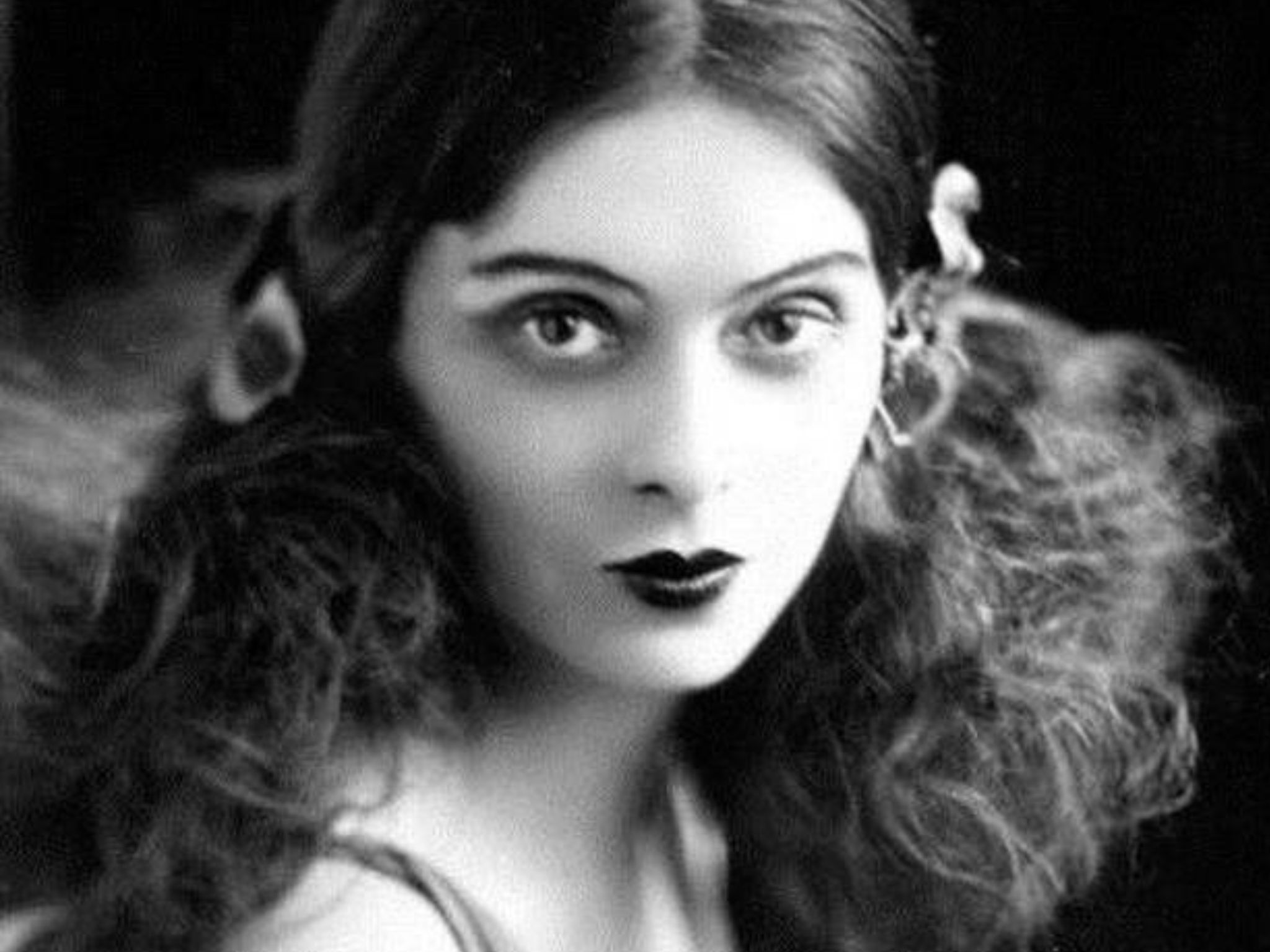
Dame Ninette de Valois was an ever-present figure throughout my years training at the Royal Ballet School, her name repeated in ballet studios, her influence permeating every rehearsal room. I saw her only once, at a celebration of her 100th birthday at the Royal Ballet School in 1998 when I was a junior associate of the school. And yet her legacy as founder of the Royal Ballet has been of great significance to me, both during my time as a dancer and more recently when researching and writing my two ballet-themed historical novels: Clara & Olivia and The Sleeping Beauties. Ninette de Valois, or Madam as she was known by her dancers, transformed British ballet from its humble reputation as divertissements in music halls to a great art form, alongside music, opera, drama, and the visual arts.
Irish-born Edris Stannus chose her professional name, Ninette de Valois, when she began dancing in London for Lila Field’s dance troupe, aged thirteen. It was, her mother felt, a more suitable name for a ballet dancer, suggestive of the French, Italian and Russian ballet dancers that had made the art form so beloved. In the 1920s, she joined the famous Ballets Russes, dancing for Diaghilev and working alongside the greatest dancers, designers, choreographers and musicians of the time.
The Ballets Russes made a significant impression on de Valois and was the fertile ground where her aspirations developed for the establishment of a home-grown British ballet. As with the Ballets Russes, de Valois encouraged innovation and growth, while at the same time rooting her decisions for a British ballet company in the traditions of ballet that had formed over the past decades. She was inspired by a number of great dance teachers from the Italian, French, Russian and Danish schools of ballet, including Édouard Espinosa, Marie Rambert, Nicolai Legat, and Enrico Cecchetti. Each had their own style and approach, and I remember my teachers at the Royal Ballet School explaining to us which of these legendary teachers had influenced the petit allegro or adage or battement frappé that we were attempting in our ballet lessons.
In 1926, Ninette de Valois left the Ballets Russes and opened her own school: The Academy of Choreographic Art. This was the beginning of her work to create a British ballet with a style of its own, an art that sprang from the Italian, French, Russian and Danish schools, but would have its own unique flavour. The school offered classical ballet lessons, of course, but also lessons in theatre art, which instructed on theatre design, costumes and music. This focus on not only the technique itself but also the staging of a ballet and the significance of dance history was an important part of my education at the Royal Ballet School, the school that developed from these small beginnings in the 1920s. Alongside our ballet lessons, we studied the history of ballet and learnt about dance forms from different cultures, including Scottish, Irish and Russian national dances. We explored significant productions of the 20th century and I have fond memories of hearing about the controversial opening night of Stravinsky and Nijinsky’s The Rite of Spring in Paris in 1913 and the audience’s shocked reaction. We discovered how this ballet paved the way for decades of bold developments in ballet. De Valois’s own choreography, and that of the choreographers she found and nurtured, continued this vision of innovation and change.
It was when de Valois began her collaboration with Lilian Baylis, the manager of the Old Vic Theatre, that she found a way to start a company of her own. In 1931, the Vic-Wells Ballet School and Company was founded. Thanks to funds raised through the tireless campaigning of Lilian Baylis, Sadler’s Wells Theatre in Islington was brought back from its ruins and became the home of Ninette de Valois’s new company. It was these early years of the company that inspired the setting for my first novel, Clara & Olivia, specifically 1933 and the production of the ballet Coppélia. This was de Valois’ first attempt to recreate one the great classical ballets, and she travelled to Paris to seek out the former regisseur of the Imperial Ballet at the Mariinsky Theatre. Nicholas Sergeyev had fled Russia after the 1917 Revolution, taking with him trunks containing the notation books of many of the ballets of Marius Petipa and Lev Ivanov including Swan Lake, Giselle, The Nutcracker, The Sleeping Princess, and Coppélia. In 1933, the company was small and not yet equipped for staging a large-scale ballet, but they succeeded in putting on the first two acts of Coppélia, recruiting the famous ballerina Lydia Lopokova for the star role.
A brilliant choreographer herself, Ninette de Valois understood the importance of attracting and nurturing choreographers who would create works for her company, rather than solely producing the great classical ballets. It was essential, she believed, that her new British ballet had its own creations. There have been many exceptional choreographers attached to the different versions of the Royal Ballet over the years. Frederick Ashton, followed by Kenneth Macmillan, are the two most influential names in establishing the uniquely British style: Ashton’s La Fille mal Gardée and Cinderella, for example, and Macmillan’s Romeo and Juliet and Mayerling.
In my research for my novel The Sleeping Beauties, I was fascinated to learn about the work of Ninette de Valois and her company during the Second World War. I set much of the novel during real tours and productions in those years, and the prevailing commentary in the sources I read was that the Sadler’s Wells Ballet company’s efforts at this time, their work ethic and determination to bring ballet to as many corners of the UK as they could, despite the many challenges of war, led to the growth of ballet’s popularity as a home-grown art. The leading dancers became beloved stars, celebrities who provided an escape from the bleakness of war. Margot Fonteyn, Moira Shearer, Robert Helpmann, Pamela May, Beryl Gray, Leslie Edwards – these are just some of the dancers who became well-known, perhaps not quite household names, but certainly stars of the ballet. In her memoir, Come Dance With Me, de Valois writes about a Saturday during wartime where they put on three performances, such was the demand for tickets to the ballet.
When the war ended, de Valois’s company was offered a new home, a chance to expand the scope of their work beyond what they could achieve in their Islington theatre. This new home was the Royal Opera House, Covent Garden, and de Valois chose The Sleeping Beauty as the production that would re-open the theatre after its re-assignment as a dance hall during the war. This was no small task, and de Valois showed her formidable determination once again in the way she brought a team together to pull off a remarkable transformation, removing the bandstands and Mecca dance floor from the war years and staging an ambitious production with new, elaborate costume and set designs. De Valois writes about these months of preparation in her memoir. It was an exciting time, yet also fraught with challenge: the effects of continued rationing of fabric and paint; the male dancers gradually returning from the forces, fitting in some practice and rehearsals before they had received their demobilisation papers; the huge task of turning Oliver Messel’s beautiful designs into a reality. And yet, by the time the curtain lifted in February 1946 with Margot Fonteyn and Robert Helpmann in the leading roles, every ticket had sold and there was a queue snaking around the building, Londoners desperate to grab the few standing tickets.
There are so many productions, tours and artistic collaborations that I could list here that reflect Ninette de Valois’s remarkable career and her dedication in building a legacy for British ballet, a legacy that continues today with the work of the Royal Ballet School, the Royal Ballet and the Birmingham Royal Ballet. In 1956, both companies and the school were granted a Royal Charter, changing the name of Sadler’s Wells to the Royal Ballet, Princess Margaret becoming President soon after. Both the school and the company have remained committed to a marriage of tradition and innovation, an approach that resonated throughout my years at the school. We learnt the repertoire of the past while, at the same time, were encouraged to choreograph, to work with new creators, to think about how dance can both move forward and remain rooted in a disciplined classical tradition.
Dame Ninette de Valois has a myth-like status, for me and for many dancers who grew up hearing her name without ever having the chance to work with her. In researching her life and work when I was writing my historical novels, I was inspired by her focus, her certainty, and her determination that she could bring brilliant people together to build a legacy. She has a reputation for being fierce, sometimes cruel to young dancers desperate to please her, without doubt a formidable leader, but there is also no doubt that she created something remarkable. One only has to visit the Royal Opera House today to see the continuation of her vision.
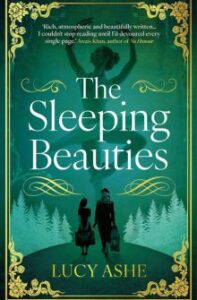
Lucy Ashe is a writer and the author of Clara & Olivia and The Sleeping Beauties.