
Home » 20th C

20th C

Andrew Southam on Cyprus 1974

Andrew Southam on Cyprus 1974

The historian details the causes and consequences of the crisis, analysing the roles of Greece, Turkey, Britain and the United States, the miscalculations that led to the island’s division, and the competing security and political objectives behind events in the Mediterranean.
Andrew Southam

Congratulations on Cyprus 1974: Conflict in The Mediterranean: No Control, No Conspiracy, Andrew and welcome to Aspects of History. Was 1974 primarily the consequence of Greek Cypriot nationalism, Turkish intervention, Greek military policy, British failure, or wider...

Justin Doherty

Justin Doherty

Justin Doherty

Book Reviews Click on the links below to read the full review[dpdfg_filtergrid custom_query="advanced" multiple_cpt="book_reviews" use_taxonomy_terms="on" multiple_taxonomies="name_of_author" include_terms="171" order="ASC" show_private="on" thumbnail_size="170x259"...

Promote Your Writing with Aspects of History

Promote Your Writing with Aspects of History

Are you a historian, historical novelist or publisher looking to raise your coverage and sales? We can help!
Aspects of History

We have posted a guide about some of the ways in which we can help writers promote their work. An Aspects of History Monthly Promotion We will host an article, author interview and book review on our site and promote through X too. Lines from reviews can be lifted to...

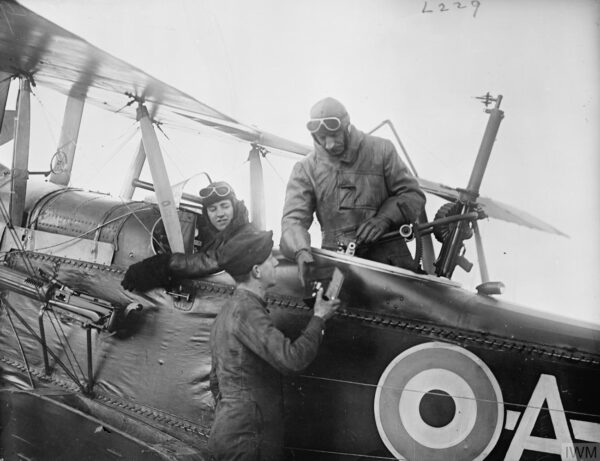
The Turbulent Birth of British Aviation

The Turbulent Birth of British Aviation

From innovative Edwardian pilots and the first transatlantic flight to the technological leaps of the First World War and the development of the Spitfire, the historian makes the case that the eccentric pioneers who paved the way for Britain’s place in the skies deserve more of the limelight.
Charles Spicer

Nearly sixty years after his fellow countrymen, Orville and Wilbur Wright, first flew an aeroplane with an engine, President John F. Kennedy, addressing a large crowd at a university in Texas, reaffirmed America’s ambitions to be the first country to land a man on the...

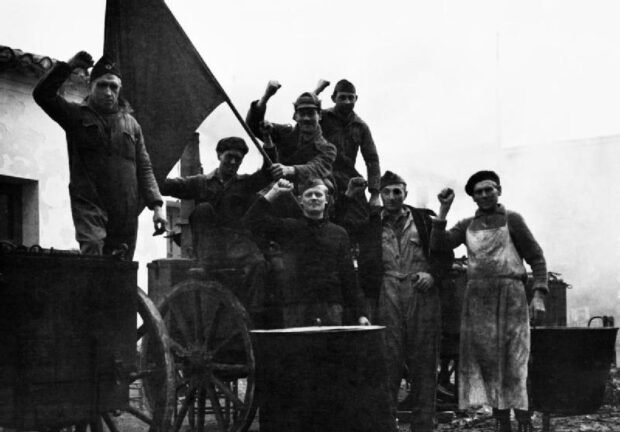
Foreign Volunteers and the Global Civil War: Why 35,000 People Fought in Spain

Foreign Volunteers and the Global Civil War: Why 35,000 People Fought in Spain

The novelist uncovers the motivations of those volunteers who joined the International Brigades who travelled to fight Franco’s forces during the Spanish Civil War and probes opposition to fascism across Europe between the World Wars.
Brian Devitt

Nearly a century ago, people from around the world left their homes and everything dear to them to volunteer to fight against the rising tide of fascism. After World War I, conditions in Europe were bleak. This helped fuel the rise of fascism, leading to Benito...

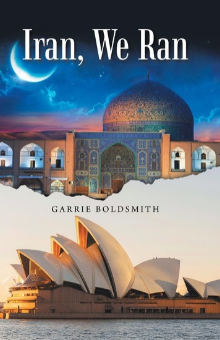
Iran, We Ran, by Garrie Boldsmith

Iran, We Ran, by Garrie Boldsmith

An engaging and suspenseful novel that follows two Iranian men whose contrasting circumstances drive them to flee their homeland, which explores the intersection of political repression, organised crime, compromise and migration.
Sophia Kazan

In Iran, We Ran, Garrie Boldsmith weaves together the stories of two Iranian men whose very different circumstances lead them to the same conclusion: they must leave their home country if they are going to have a future. Set against the backdrop of modern day Iran and...

War or Peace? The United States and China, 2026–2049: In Conversation with Tim Hames

War or Peace? The United States and China, 2026–2049: In Conversation with Tim Hames

Is conflict between the two global superpowers inevitable, or could demographic change, economic interdependence and contrasting technological priorities lead to a different future? The author examines the historical roots of the rivalry and considers what the next 25 years might hold.
Tim Hames

Welcome to Aspects of History, Tim. The United States and China are the two dominant superpowers of the 21st century. How did we arrive at this point, and what has driven this rivalry you recount in War or Peace?: The United States and China, 2026–2049?  For the vast...

Garrie Boldsmith on Iran, We Ran

Garrie Boldsmith on Iran, We Ran

The novelist reveals how his family’s history of migration inspired his novel, drawing on his legal career and travels and exploring the realities of migration, the persecution of LGBTQI+ people in Iran and the human stories behind it.
Garrie Boldsmith

Congratulations on Iran, We Ran, Garrie! What inspired you to first write this story and how did the idea develop into the novel? I have, both personally and professionally as a lawyer, always had an interest in migration. My fascination of it stemmed, I believe, from...

Jemahl Evans

Jemahl Evans

The author discusses the origins of his character, Sir Blandford Candy, his latest novel, A Visit to Bedlam, researching the English Civil Wars through contemporary printed sources, and why getting history students to read and think critically matters.

Welcome to Aspects of History, Jemahl. What first attracted you to the period or periods you work in? Ha, well, technically I am a medievalist, at least by training, but the 17th century has always fascinated me. The initial spark for my character, Sir Blandford...