
Books
Click on any of the books covers below to either buy or get more information on Amazon


Articles
Click on the links below to read the full article

A friend of mine has a glorious tradition. She still reads with her near-teenage son every night. To my absolute joy, she is currently reading Mary Renault with him, in an attempt to introduce him to complex, layered prose.I bow to no-one in my veneration of Mary Renault. But my friend is ...

Damien features on a number of podcasts and interviews, discussing his work, which you can find here: History Hit on AcastMidas Culture Shot podcast with Sky News editor Ben Monro-Davies on SpotifyBBC Radio 5 Interview on SAS Band of Brothers - Start: 2h19m. Second ...

In many ways I came to writing historical novels late in my literary career; strangely so, for I have always been fascinated by history. The first book I ever wanted to never end was Carola Oman’s Robin Hood the Prince of Outlaws. A little later, a childhood accident put me in hospital for 6 ...

Dante Alighieri (1265 – 1321) the Florentine author of the medieval masterpiece of fantasy-fiction known as the Divine Comedy provides the modern observer with a unique insight into the world-view of a thinking man at the height of the Age of Faith. This means that his work provides a resource ...

For Ian Fleming, creator of James Bond, the spectacular collapse of the British Empire after the Second World War was like a bereavement. It even followed — almost to the letter — the classic sequence of grief: denial, anger, bargaining, depression, and, finally, acceptance.Fleming ...

When I pitched The White Ship to my publishers (William Collins), I ended with a shorthand reference to celluloid success: “Essentially, this is Titanic meets Game of Thrones – with a hint of Sliding Doors.”Tragedy, brutal ambition and chance lie at the heart of this historic tale, which ...

The piety of Cecily Neville was much praised during her lifetime, particularly in her later years. Her pride was also widely acknowledged. Proud Cis has become a recognisable epithet. Yet scandal raised its ugly head. When her husband was commanding the English forces in France and Cecily ...

John le Carré may have a few rivals when selecting the greatest novelist of the late 20th century (there are arguments to be made for Graham Greene, Tom Wolfe, and Philip Roth, among others) but he certainly has no superior. Le Carré was not just a chronicler of the cold war, he was a ...

It had been raining for much of the day and the air was still damp when Wally Parr clambered into the glider that would take him to Normandy. It was 10.35pm on 5th June 1944 and Parr’s nerves were on edge – with good reason. He had been selected for an audacious airborne operation that was to ...
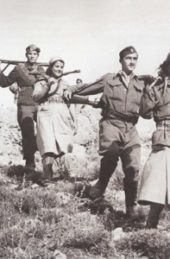
It was approaching midnight and the snow-capped peaks of the Roumeli Mountains in Greece could be seen gleaming in the moonlight. The American Liberator aircraft circled Mount Giona a couple of times before Eddie Myers gave the signal to jump.A few seconds later, he and his fellow saboteurs
10 Minute TudorsLeanda's series of 10 minute podcasts on: Soundcloud or Podbean

With his wife, Anne Bolyen, in the Tower, Henry VIII considered every detail of her coming death, pouring over plans for the scaffold. As he did so he made a unique decision. Anne, alone amongst all victims of the Tudors, was to be beheaded with a sword and not the traditional axe. The question
Short Stories
Click on the links below to read the full story
The latest Blandford Candy novel – A Visit to Bedlam – was born out of lockdown and a love of all things Alexandre Dumas. When COVID hit, my mum was severely immune-compromised due to COPD and dealing with a recurrence of breast cancer. I decided to take a break from teaching to look after her,
Author Interview(s)
What first attracted you to the period or periods you work in?I write mainly about Russia, the Caucasus and the Middle East. My mother's family were refugees fleeing the pogroms of Romanov Russia, especially Lithuania, Poland and Odessa, and so I was always fascinated by those worlds and that led me to Catherine the Great and Potemkin, my first book. As a war correspondent in the 1990s I covered Georgia, Azerbaijan and Armenia during the Karabakh war; Ossetia and Abkhazia; Chechnya and Grozny; and the fighting in Moscow in 1993, so that made me even more fascinated in the period. All roads led to Stalin and I started to write about him. For Jerusalem, I had visited the city often and been fascinated by its history, so I always planned to write my biography of the city and the Middle East.Can you tell us a little more about how you research? Has the process changed over the years?My first three big history books were based on archival research so I simply went to the archives in Moscow, Tbilisi, London and Paris amongst others. Now my books are more based on synthesis and wide reading, but I always use old fashioned notecards.The common phrase is that history is written by the victors. Do you think this is true?Yes, often, but it is also frequently written by the survivors and victims who outlive the victors.Are there any historians who helped shaped your career? Similarly, can you recommend three history books which budding historians should read?I was very influenced by Simon Schama's Citizens: A Chronicle of the French Revolution and Isabel de Madariaga's Russia in the Age of Catherine the Great. Also Cromwell, Our Chief of Men by Antonia Fraser, and Peter the Great by Robert MassieIf you could meet any figure from history, who would it be and why? Also, if you could witness any event throughout history, what would it be?I would love to meet Catherine the Great, Herod, Nero, Stalin, Balzac, have dinner with Proust and attend Yalta and the Congress of Vienna.If you could add any period or subject to the history curriculum, what would it be?There’s far too much Tudors and British imperial history. We need more Asia, Africa and South America FAST.If you could give a piece of advice to your younger self, either as a student or when you first started out as a writer, what would it be?My advice is to start writing now; keep a diary to practice; then if you want to do books, write a book. Don’t wait too long; finish it and start rewriting - it is all in the editing and rewriting.

Harry Sidebottom is the bestselling author of the Warrior of Rome series, the latest of which, The Return, came out in October. He is Fellow and Director of Studies in Ancient History at St Benet’s Hall, and Lecturer in Ancient History at Lincoln College, University of Oxford.Interviewed by Alistair Forrest.We know you have an academic background. When did you discover you could write with in pacey novelist’s style?I was writing fiction long before I became an academic. You know how at school, when you are about thirteen, you stop writing stories, and have to analyse Steinbeck or whatever. Well, I was the odd child that carried on writing stories, just for my own pleasure. Actually I wanted to become an academic because I was under the misapprehension that they got half the year off, and that I could use those months to write a novel. Obviously I was wrong on both counts. First, that you are expected to work in the vacations. Second, it takes me a lot longer than six months to research and write a novel.Finding a style that suits you – what is sometimes, pretentiously, called finding your `voice` - depends on trying to write many different types of book. I wrote all sorts – a modern thriller, a fantasy novel, several sub-Martin Amis literary novels, even a cowboy story. In the end I fell back on the truism `write what you know`. That gave me three options: literary novels set in academe, horse racing stories, or Classical history. Probably just as well, I started by opting for the latter.How do you use, whether maximising or limiting, your knowledge as a lecturer in ancient history?The big advantage of being a lecturer in the history of the period in which my novels are set is the research can be more `targeted`. When I move to a new theme or place, I already have a working knowledge of the original sources, as well as where to find the latest scholarship. Having said which, most of the research has to end up on the cutting room floor. You need to include enough to give the reader confidence that you know what you are talking about, and to evoke the time and place and culture, but avoid at all costs the `info dump`, which serves no purpose other than to show off your research.What inspired you to write The Return and how did you research the background (apart from your inherent academic knowledge of course!)?The original inspiration for The Return was reading an anecdote in Cicero about a murder in the Sila Forest in Calabria. The idea lay dormant – for about twenty five years! – until a short story by O. Henry made me think about exploring the effects of Roman imperialism on peasant farmers in Italy.Researching The Return I needed to learn about farming in the Roman Republic. So, the first thing to read was Cato, On Agriculture.The Return sets out to merge the brooding menace of a Nordic Noir murder mystery in an evocative Italian setting with the explosive action of a historical novel.Do you visit the areas you intend to write about to research the lie of the land, so to speak?I try to visit every location in my novels. A couple of reviewers in the TLS have been kind enough to praise my `boots on the ground` style. Autopsy – in the `looking at it yourself` sense – lets you see how the various elements of the topography link together. You can get lots of views of, say, the library of Celsus in Ephesus from books or the internet. Only when you are there, do you realise what you can see when you stand on its steps and look out at the rest of the city, at the river and the hills – and the weather and the smells…One or two locations are just too dangerous to visit. Researching The Lost Ten, I did not go to Syria during the civil war!What else inspires you? Which ancient writers? What modern books do you read?Most of my novels have been inspired by something in an ancient writer. Possibly my favourite ancient source is the so-called Augustan History. It is a series of biographies of emperors, which claims to have been written by six authors about 300AD. In fact it is a Latin historical novel, written by one man, about 400AD.A great deal of my reading is taken up by modern historians writing about the Classical world. When I get a chance to read fiction, I tend to go for literary novels (Julian Barnes and William Boyd are particular favourites among the Brits, and Cormac McCarthy among the Americans), or really good crime fiction, such as James Lee Burke or, my friend, Donna Leon.We know and respect your Warrior of Rome hero Ballista. Will Paullus make a return?Ballista will return in two novels in the next year or so: Falling Sky (set in Gaul), and The Burning Road (set in Sicily). I have a feeling Paullus may be summoned back to the standards from the plough.Your earlier series are set in the 3rd Century AD, The Return in the 2nd century BC. Is it difficult to jump 500 years or does this come naturally given your background?Luckily, I have taught the Roman Republic of the last two centuries BC for many years. Even so, I had to do a lot of reading to make sure nothing anachronistic crept in.What other era's would you like to write about?Lots! Right now, I am thinking about a novel on Alexander the Great, and another on Pompey and the fall of the Republic. Further afield, I have plans for a series of modern thrillers, two novels set at the end of WW2, one in WW1, some contemporary detective stories, and (back to where I started!) a big literary novel.How do you separate your academic work from your novel writing; which is your main job and do they get on together, so to speak?I think people wrongly believe there is a great gulf between the two. In both cases you do much the same: identify your subject, plan your research, take lots of notes, make lots of plans, write to try and take your reader with you. Of course, there are differences – I don’t make up dialogue in my history books! – but maybe not as many as is sometimes thought.My main job now is being a professional novelist. Yet I believe the novels have made me a better historian. They make me think about whole new areas of ancient history.What are you working on next?This autumn I am writing a biography of Rome`s maddest emperor. The working title is Sex & Death: Heliogabalus and the Decadence of Rome. I am using Heliogabalus` life as a prism through which to view big issues – both then and now – like political power, religion, racism, and, of course, sex, lots of sex. As Mary Beard often says, `Rome is good to think with`.And what do you hope to have achieved in, say, five years’ time?I very much hope to have introduced lots of new readers to the pleasures of ancient Rome!Alistair Forrest is a journalist, editor and author of Libertas and Line in the Sand, the story of David and Goliath. His latest book, Viper Pit, the second of the Agents of Rome series, was published in August.

Russian Roulette is the first biography of Graham Greene in a generation. “At last Graham Greene as the biographer he deserves.” The Evening Standard. Richard Greene (no relation) was born in Newfoundland, educated at Oxford, and is a professor of English at the University of Toronto.Interview by Richard Foreman.What first provoked your interest in Graham Greene? Was it a particular novel? Also, what attracted you to writing about the man rather than just the novelist?Oddly enough, I disliked Graham Greene when I first encountered his work – I was about 16 and did not like The Heart of the Matter at all. But then I read The Power and the Glory and from then on I was an addict. As for writing about him, that happened by an odd accident. I had edited a volume of the poet Edith Sitwell’s letters and around 2003 was working on a biography of her. I contacted Greene’s son Francis about getting access to some embargoed letters Greene had written to her at Georgetown University: when he heard that I had experience of editing letters, he invited me to compile a selection of his father’s. I laid the biography of Edith Sitwell aside and got to work on Graham Greene: A Life in Letters, which came out in 2007. I then returned to my project on Edith Sitwell, completed in 2011, and afterwards decided to try a full literary biography of Graham Greene. I expected it to take three years -- it actually took eight, but I loved the work. In Russian Roulette, I wanted to put more emphasis on political issues than other biographers had done. I hope I was successful.The biography, as well as the title of the book of course, deal with Greene's relationship with suicide. Can you explain a little about the title, Russian Roulette? Also, ironically perhaps, it seems that it was only after Greene's near-death experience, whilst travelling through Africa with his cousin, that his fixation with suicide was nullified (though not completely) and he began to find some extra purpose in his life. Would you agree?Greene claimed that as a young man he played Russian Roulette on six occasions. I regard the story, for various reasons, as more myth than fact. There is evidence that whatever he was doing, there were no bullets in the chambers. However, the story is helpful for understanding a pattern in his life. He often did things every bit as dangerous as Russian Roulette, such as visiting battlefields, in order to relieve boredom and depression arising from his bipolar illness. At several points he was very close to suicide, both before and after the Liberian trek. His mental health improved from the early 1960s and, although he had times of depression, he was far less tempted to take his own life.One of the great strengths and rewards of reading Russian Roulette is that it will prompt many people to read or re-read Greene's novels. The biography highlights just how much Greene borrowed his plots and characters from real life - but also how much his fiction was a product of his imagination. Is there a work of Greene's that you have often returned to over the years and gleaned different things from? And, for those who have not travelled to Greeneland before, could you recommend a good starting place?I think The Power and the Glory is a great place to start, or perhaps The Quiet American. Both are splendid narratives. If one would like to start with an entertainment, Our Man in Havana is one of the funniest books you will ever read.It is said that journalists provide us with the first draft of history. How do you rate Greene as a journalist, as opposed to novelist? For much of his life it seems that Greene treated his travels as raw material for writing books. Yet, in his later years, he inserted himself more into the story and was, to some extent, an activist rather than impartial reporter. I am thinking of his relationship with Omar Torrijos and Panama - and his campaign linked to J’Accuse.In the course of writing the biography, I became much more aware of Greene as a journalist than I had been before. While still a university student he made his first visit to a trouble spot – Ireland, just after the Civil War, and wrote about it. And so it went on through his life. But you are right to observe the element of advocacy in his journalism. He declared openly that he was ‘on the side of the victims’. The conflict between detachment and commitment is addressed specifically in The Quiet American, where the journalist Fowler has to make a such a choice: another character says to him ‘Sooner or later, one has to take sides. If one is to remain human.’ The J’Accuse pamphlet is, to my mind, not really journalism, however, but political and legal agitation on behalf of a friend who was being abused by her husband and his cronies.Related to Greene inserting himself into events and the lives of others, do you think that Greene's anti-Americanism and the make-up of his own character compromised his judgement in his dealings with Fidel Castro and Kim Philby? The biography is particularly insightful in charting the latter's involvement with Greene. What are your thoughts on the subject? Do you think Greene made an error in leaping to Philby's defence too quickly and too ardently?Greene’s anti-Americanism seems to have been present in embryo at the time of his journey to Mexico in 1938, but hardened while he was in Vietnam in the early 1950s and witnessed American meddling in that country. As he grew older, he seemed to distrust both East and West in the Cold War and turn his attention and sympathy to the troubled and impoverished countries of Africa and Latin America.By his third visit to revolutionary Cuba, Greene could see flaws in Fidel’s regime and privately protested about the detention of gays and dissidents in labour camps. He did find Fidel fascinating but was not uncritical. He wanted Cuba to evolve towards democratic socialism, and Fidel failed notably in the area of human rights. As for Kim Philby, yes, I think Greene’s defence of Philby was incoherent. Perhaps his attitude went back to his school days when he was believed to be betraying his friends in the dormitory to his father, the headmaster – he sometimes, in later life, over-performed loyalty as if to shake off this old accusation. Of course, Greene was contrary and defended Philby as if from schoolyard bullies – but Philby was not his innocent schoolmate, and many brave people died because of his revelations to the Soviets. There is a separate possibility: Greene may have had permission from SIS to maintain a bridge with Philby – be someone to whom he could eventually reach out. There was always the hope that in time Philby might reveal the names of other moles in British intelligence. However, based on the information currently available, I think Greene’s defence of Philby, animated by his anti-Americanism, was entirely misguided.Tim Butcher, in his book Chasing the Devil, famously retraced Greene's steps in Journey Without Maps. If you could retrace Greene's steps for a similar adventure, or be a fly on the wall for one of the moments in his life, what would it be and why?I would love to have been with him in Vietnam, especially for his meeting with Ho Chi Minh in 1955. He presented a secret letter, presumably from British officials, the contents of which were never revealed. It may have related to the relief of Vietnamese Catholics uprooted by the war and the partition of the country, but that is only a guess. That would have been an extraordinary conversation to have overheard. Another fascinating occasion occurred thirty years later at a peace forum in Moscow. Mikhail Gorbachev shook his hand and said ‘I have known you for some years, Mr. Greene’ – whatever did he mean? That he was a reader of the novels, or that Greene had figured in intelligence reports, perhaps related to Latin America? It was a very strange remark.Are you currently working on any other projects?Not yet! I am writing a little poetry. There was little room for rhyming couplets in Russian Roulette.Richard Foreman is an author and publisher. His books include Warsaw, Spies of Rome and Crusaders.
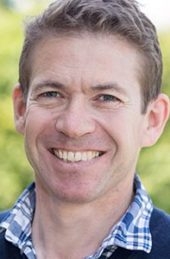
What first attracted you to the period or periods you work in?I remember, as a child, hearing tales of military derring-do round the dinner table. My Dad loves reading military history, and often discusses the great battles and commanders with friends and family. I suppose I first got interested as a means of getting his attention. But I quickly realized that I too was hooked, particularly on the wars of the Victorian period and the 20th century. What fascinates me about war, and the study of war, is that it seems to encompass the full spectrum of human behaviour: both good and bad.Can you tell us a little more about how you research? Has the process changed over the years?When I started, it was an incredibly long-winded business, laboriously copying archival documents on my ancient laptop and using the phone book to track down veterans. The internet, smart phone apps and digitisation have revolutionized the business of historical research. For my last book I even interviewed some people on Skype/Zoom. But to research properly, you still need to wade through endless documents you might never use on the hunt for that tiny glimmer of gold that will change everything.The common phrase is that history is written by the victors. Do you think this is true?Yes, of course, but not for ever. The point about history is that it’s a ‘live’ subject, constantly changing, and there’s always room for a different interpretation. The more critical (some would say overly critical) reassessment of British imperial history is a case in point. In the 19th century, a man like General Henry Havelock was a hero for helping to put down the Indian Mutiny. Now, to many, he’s a villain and there are calls to rename schools and take down his statue in Trafalgar Square. It is, however, important to see him in context, and not judge him by today’s mores. Few major figures of the 19th Century appear acceptable, much less saintly, to modern eyes.Are there any historians who helped shape your career? Similarly, can you recommend three history books which budding historians should read?I admire Gitta Sereny, the Hungarian born author of books like Into That Darkness, a study of death camp commandant Franz Stangl, and a brilliant biography of Hitler’s architect Albert Speer. The historian who has had the most positive influence on my career is Sir Hew Strachan, the former Chichele Professor of the History of War at Oxford. Hew supervised my PhD at Glasgow, where he was Professor of Modern History, having convinced me that a doctorate was worth having, even though I had already published five history books. He was right. Budding historians should read Herodotus’ The Histories, Edward Gibbon’s The History of the Decline and Fall of the Roman Empire, and, more recently, NAM Rodger’s The Command of the Ocean, the second volume of his magisterial naval history of Britain.If you could meet any figure from history, who would it be and why? Also, if you could witness any event throughout history, what would it be?The figure would be Winston Churchill. He’s been attacked recently for his outdated views of empire and race, and it’s quite right that they’re taken into account. But they were also of their time and, in my view, are dwarfed by the extraordinary contribution he made to this country when, as wartime prime minister, he kept us in the fight against Nazi Germany when other premiers would have sued for peace and condemned the country to life as a vassal state. The event would be the Battle of Waterloo: the last great battle between European powers that could be witnessed in its entirety from a suitable vantage point (say, next to Wellington on the Mont Saint-Jean ridge).If you could add any period or subject to the history curriculum, what would it be?The subject would be the British Empire. We can’t hope to understand who we are as a nation, and how we got there, without a proper knowledge of our imperial history since the 16th century, warts and all. There were a lot of bad things done in our name, as is the nature of empire, but we should also remember the positives.If you could give a piece of advice to your younger self, either as a student or when you first started out as a writer, what would it be?Treat all history as a damn good story. There is a tendency among young writers, and I was no exception, to get bogged down in detail because you’ve done the research and you don’t want to leave anything out. That is a mistake. The best history writing moves at pace and focuses on people.Can you tell us a little bit more about the project you are currently working on?I’ve just finished the first authorized history of the SBS in any era, but in this instance the story of how the famous maritime special forces unit was created in World War Two. It was a huge privilege to work on this project, to meet current and former members of the unit, and to gain access to the secret SBS archive in Poole. The book will be published in September 2021. Meanwhile, I’ve started work on Devil Dogs, a book about a company of US Marines fighting its way through the Pacific.

What first attracted you to the period or periods you work in?It’s a whole host of intersecting fascinations, actually. I started off studying Central European history in the aftermath of 1989, then gravitated to Germany – specifically Nazi Germany – which I still find fascinating. My last two books – The Devils’ Alliance and First to Fight – have taken me back to Polish history, which is in a way where I started from. Polish history is endlessly fascinating, not least in how its dark chapters of oppression and occupation have played out in the twentieth century. I hope I can bring some of that complexity and fascination across to English-speaking readers.Can you tell us a little more about how you research? Has the process changed over the years?It has changed enormously since the time I first started – no internet then, so one actually had to go to archives and libraries for *everything*. Obviously that has changed, online materials make some aspects of research easier, but the essentials are still the same, you need archives and libraries to get to the material that you need, especially if you are looking to produce something original.The common phrase is that history is written by the victors. Do you think this is true?I think that is largely true, but it is also changing. Increasingly, over the last 30 or so years we have seen a shift in the way that history is written, and I don’t just mean the emergence of marginal narratives around sexuality or gender, rather there has been a general process of democratisation going on, whereby all voices are more prominently represented, not just those of the great and the good. This process, by extension, means that the adage about history being written by the victors is much less true now than it once was, but there are still huge sectors of the wider narrative, on any given subject, that are neglected. It’s the historians job to seek those out and rectify them, rather than just go for the low-hanging fruit or disappear down an academic rabbit-hole.Are there any historians who helped shaped your career? Similarly, can you recommend three history books which budding historians should read?Norman Davies was the great formative influence on my career. I worked for his as researcher and as co-author, and it was a brilliant apprenticeship. Norman is a terrifically independently-minded historian and a great stylist. He taught me a lot.Three history books to recommend: I’d say Barbara Tuchman The March of Folly, a wonderful, quirky work of meta-narrative. Neal Ascherson Black Sea – a brilliant melding of history with travelogue, and Richard Grunberger A Social History of the Third Reich”, which shows that serious subjects don’t need to be presented in a boring way, and that nuance need not be sacrificed for readability.If you could meet any figure from history, who would it be and why? Also, if you could witness any event throughout history, what would it be?I’d have to say Hitler. I’ve spent so long reading and writing about him, it would be fascinating – if discomfiting – to observe him at close quarters. Same principle applies to an event. Most fascinating would be those that I have written about and tried to make come alive on the page – so perhaps the signature of the Nazi-Soviet Pact, or the Battle for Berlin in 1945. Essentially, I’d like to see if my depiction of events was accurate!If you could add any period or subject to the history curriculum, what would it be?I’d add modern Polish history. I think we have a surfeit of German and Russian history already, and it would be most useful to counterpoint that with the experience of one of the countries that has suffered most egregiously from the depredations of the other two. It would also serve to immunise younger generations against the supposed positives of communism.If you could give a piece of advice to your younger self, either as a student or when you first started out as a writer, what would it be?Nothing major, I don’t think. Learning languages is always good, not only professionally but also philosophically. Also, I’d say that reading widely is very advisable – and not just stuff that is “on-topic”; seek out novels, travelogue, popular history, everything – be an intellectual magpie. But beyond that, I’d say relax and enjoy the ride. It’s all good, we’re not here for long, so let’s just make the most of it.Can you tell us a little bit more about the project you are currently working on?I’m currently writing about the rescue efforts of the so-called Ładoś Group; a group of Polish diplomats and Jewish activists, in Bern Switzerland, who presided over the most extensive passport forgery operation of World War Two, sending Latin American passports into occupied Poland to enable Jews to escape the Holocaust. It’s a fascinating story of moral bravery.

What first attracted you to the period or periods you work in?It’s much harder getting into the motivations and mindsets of pre-Enlightenment people, and often requires a higher level of theology than I have. The Enlightenment was the first period in history that the primary motivation was not fear, mostly fear of God. The fact that I can read the handwriting helps too; when you get much further back than 1750, it starts to get very hard to decipher.Can you tell us a little more about how you research? Has the process changed over the years?Although I get the same thrill as every other historian in handling original documents, and I do believe they give you special insights, that hasn’t always been possible since so many key archives have been closed over the Covid period. For my present book, on King George III, I have been incredibly fortunate that the wonderful Georgian Papers Programme had put 400,000 pages of documents online. The common phrase is that history is written by the victors. Do you think this is true?No. You’ll read paeans of praise to the fighting qualities, generalship, courage and so on, of the soldiers of the US Confederacy, the Germans in the two world wars, Napoleon’s Grande Armée, all of whom lost, thank God. The Cavaliers in the Civil War provide the romantic figures, and who doesn’t remember Hannibal and Spartacus and the heroes of Masada, compared to the Roman generals who defeated them? You can just as easily argue that history is written by the losers.Are there any historians who helped shaped your career? Similarly, can you recommend three history books which budding historians should read?The late Professor Norman Stone taught me that History is fun; the Cambridge historian Neil McKendrick taught me that it is worthwhile as an endeavour, even important. The late Kenneth Rose taught me that it needs to work as literature if it is to survive for very long as history. Budding historians should read Talleyrand by Alfred Duff Cooper, George V by Kenneth Rose, and Great Contemporaries by Winston Churchill to be reminded of the same three lessons. If you could meet any figure from history, who would it be and why? Also, if you could witness any event throughout history, what would it be?I’d allow my little finger to be guillotined off in order to spend an evening having dinner with Winston Churchill; there’s so much to ask him about. He might have had to have read my Churchill: Walking with Destiny in Heaven first, so that he could tell me what I got right and wrong. The event I’d have liked to have watched (assuming I had the stomach for it) is the battle of Waterloo, preferably by invisible helicopter or drone.If you could add any period or subject to the history curriculum, what would it be?The curriculum tends to jump from Henry VIII to Hitler a bit too quickly. I’d like it to linger a little in the 18th century, like it used to when I was young. Schoolchildren should be taught about the greatness of the Duke of Marlborough and the two Pitts, of Wolfe of Quebec and – wait for it – Clive of India. If you could give a piece of advice to your younger self, either as a student or when you first started out as a writer, what would it be?Start early; be bold. If you’re covering a contemporary subject, get out and interview the people who were there, before they leave the scene forever. Don’t believe what they tell you without contemporary evidence, of course, but go out and visit them and talk to them respectfully about their contributions to history and society. Age does tend to lend objectivity.Can you tell us a little bit more about the project you are currently working on?King George III is now almost exclusively known as the mad king who lost America, and viewed by many as either the tyrant of the Declaration of Independence or the camp would-be killer of Hamilton: The Musical. He was neither of things, but an enlightened polymath and small-R renaissance prince.

What prompted you to chose the period you wrote your first book in?My first historical novel, The Point of Death, was set in the Elizabethan period because my MA thesis was about Shakespeare, who also influenced my second series of Roman spy stories because I was fascinated by the fact that Artemidorus, who gives Caesar a list of would-be assassins as he is on his way to the fatal Senate meeting in Julius Caesar, was an actual person who really did so. The Trojan Murders had a different starting point. When I taught Media, I had a unit on popular series (books, stories, films, TV) which posited that the most successful ones had a setting, characters and situation that hardly changed. True of the Holmes stories as it is of The Simpsons. Where better to set a series than in a war-zone where the conflict lasted for ten years? Beware of Greeks was born.What is your approach to researching your novels? Has the process changed over the years?When I started out, research involved books and articles from libraries. The Internet changed all that. Nowadays I write with my internet access open so I can double check anything. I still use books and articles, but I’d say 80% of my research is online. And rather than waiting weeks for a book to arrive at my local library, it can be on my doorstep within 24 hours or on my Kindle in seconds.Historical fiction is a great introduction to History. Can you recommend any historians to our readers to learn more about your period?My Elizabethan stories could not exist without Charles Nicholl’s The Reckoning and the latest novel A Verse to Murder was influenced by Shapiro’s 1599. My Roman books could not be as they are without Rose Mary Sheldon’s Intelligence Activities in Ancient Rome. The first in the series, The Ides also leaned on Steven Dando-Collins’ The Ides which recreates the fatal day almost hour-by-hour. My Trojan sources are on line: Michael Wood’s In Search of the Trojan War and Eric H Cline’s lectures on the collapse of the Mycenaean world. I also belong to a site called Academia – and only yesterday downloaded a paper by Ian Rutherford of Reading University’s Classics Department on Hittite and Mycenaean funeral rites.What three pieces of advice would you give a budding historical novelist looking to write and publish their first book?First and most importantly you need to write. Historical research is dangerously seductive, especially as what motivates historical novelists in the first place is fascination with particular periods; and the minute you start you are overwhelmed with the desire to get the smallest detail accurate. Secondly, my personal rule is ‘get it down first – get it right later’. And by ‘right’ I tend to mean ‘convincing’ – you need to engineer a ‘suspension of disbelief’, then you’re off. Thirdly, move with the times. Historical novels of the ‘Classic’ sort could rely on fascinating their readership with the romance of the past in a way modern writers need to be wary of. Walter Scott can start Kenilworth with a long chat in an Elizabethan inn; Lew Wallace can begin Ben Hur with three mysterious figures meeting in the desert and Dickens can famously start A Tale of Two Cities with a bit of philosophy about the historical times it is set in. Modern historical novelists tend to get on with things faster – introducing characters and settings by way of immediate gripping action.If you could choose to meet any historical figure from your period who would it be and why? Similarly, if you could witness one event from history what would it be and why?I’m torn between Odysseus and Achilles. Of all the characters in The Iliad, they fascinate me the most, though in saying that I’m aware that I put myself out of step with a lot of modern literary thought. Almost all of the great modern novels set during my period are by and about women (details below). Not only that, but much modern commentary on The Iliad points out how fully the narrative explores the unbearable cost and damage of war, personally, domestically, socially and politically. I would love to witness the arrival of the Wooden Horse, however, if not the slaughter that followed.Which other historical novelists do you admire?For this period, particularly, Colleen McCullough, Pat Barker, Madeline Miller, Adele Geras, Edward Lucas White, David and Stella Gemmell and Gordon Doherty.When you are first sketching out an idea for a novel, which comes first – the protagonist, plot or history?For these novels, The Iliad – but also reports/fragments of The Epic Cycle which tell more of the background and illuminate the characters as well as the narrative.Do you have a daily routine as a writer? Also, how important is it to know other writers and have a support network?Up at 7; ½ hr on my rowing machine to clear my thoughts, ½ hour on Duolingo brushing up language of next research/visit. 8 – 5 on the computer with breaks for coffee, lunch, tea. I usually print from 4 so my lovely wife can read/edit the day’s work for when I reassess it next morning. My wife is the start of my support network but Historical Writers are a cheerful and welcoming bunch so I have lots of Facebook friends who enjoy a lively exchange of ideas.Can you tell us about the project you are working on at the moment?Having gone with Odysseus in search of Achilles (Beware of Greeks)and lingered in Aulis while Agamemnon is debating the sacrifice his daughter (Vengeance at Aulis), we are now in the recently sacked city of Lyrnessus trying to discover who murdered Briseis’ husband and treacherously handed over the city to the Achaeans, thus calling into question the honour of Achilles who led the assault. (The Anger of Achilles). And we haven’t even got to Troy yet!

What first attracted you to the period or periods you work in?I write mostly about World War Two and immediately post war history. The attraction for me is that World War Two is generally speaking one of the only modern day conflicts in which survival of modern civilisation and democracy were at stake – so the stakes could not have been higher in any way. That makes it a ‘total war’ as Churchill famously named it – one the likes of which we’ve rarely seen before, or one hopes, will ever see again. There is the crucial bonus of course that there are still living veterans of WWII with us and they are keen to share their stories, and often so many do for the first time. Seeing their tales in print, finally being revealed to the outside world is such a special experience for those veterans – and so rewarding, of course, for the author.Can you tell us a little more about how you research? Has the process changed over the years?Not really. The research starts as always with the primary sources – reports, war diaries, letters, associated documents, photographs, audio tape or film from the time. With World War Two tales one is very lucky to have any of those last two – film or audio recordings, but the Imperial War Museum for example does hold some remarkable taped interviews with veterans. So well worth checking. And of course, a key starting point for any research is the World War Two veterans themselves, and their family members. So often there are private family collections – often, old war chests stored in the attic – that prove a treasure trove of research. Getting access to those is a really fabulous experience – unearthing untold and very nearly ‘lost’ history. Much of that primary research is held in the official archives, of course – so, for example, the National Archives, Kew, or the Imperial War Museum – but there are many, many more and the deeper one digs the more one tends to discover. Securing material from those archives has changed slightly, I guess, in that it generally is delivered in digital format, as opposed to photocopies – but I am old-fashioned I guess and always prefer to print out the documents, so I can hold and peruse them and scribble notes where required.The common phrase is that history is written by the victors. Do you think this is true?Yes. And no. Yes, when we’re talking history written in the years immediately following the events portrayed. No, when you’re talking about the passage of time. A historian like myself writing about World War Two has more perspective, hindsight, and the freedom to write the truth never mind the mores and sensitivities of the day. Equally importantly, so many files which were closed under secrecy laws are now being opened – 70 years or more after the events they portray – that more of the sensitive truth can be revealed. And in many cases even with those files still officially closed – so perhaps for 100 years after the events portrayed, for example – one can file a Freedom of Information request to get them opened early. I have filed many and never failed to get at least a redacted version of the contents released. Perusing a file no-one has seen for decades – ever since it was closed by the censors – is a great feeling. In fact, as a rule if I ever come across a file still closed I file a request for it to be opened. It would be wrong not to, in my opinion!Are there any historians who helped shaped your career? Similarly, can you recommend three history books which budding historians should read?Yes. I’d have to mention Erik Larson, simply because he is such a brilliant author of compelling narrative history and such a gifted writer and story-teller. Robert Harris also, because, while his books are billed as fiction, he does such a fantastic job of melding the real life events and characters from history with a fictional plot and I have no qualms about learning from and being inspired by such a gifted – fictional - story teller. And Andrew Roberts of course, who needs no introduction – a superlative historian and author. Their books I’d highly recommend, and especially Larsen’s WWII epic ‘The Splendid and the Vile’ – superlative – Harris’ newest ‘V2’ – gripping, brilliantly plotted – and Roberts’ splendid Churchill biography, ‘Walking With Destiny.’If you could meet any figure from history, who would it be and why? Also, if you could witness any event throughout history, what would it be?Churchill. Has to be. I’d love to ask him how exactly he stood firm in 1940-41, when all of Western Europe had fallen to the forces of Nazi Germany, when we – and our Allies - had suffered cataclysmic defeat on all fronts, when we had lost so much war material and brave soldiers at Dunkirk and long before America took the plunge and declared war on the Axis powers, and when so many in his political and military hierarchy were keen to cut a deal with Nazi Germany, and when even Hitler himself was amenable to such a deal, because he really wanted to start the push east – the assault on Russian, in the quest for lebensraum – rather than to invade Britain. The more one studies that time, and what Churchill was up against, the more incredible it is that he stood firm against all odds. As to events, Dunkirk – just because I am so utterly amazed that we managed to pluck such … if not victory, then at least survival, from the very jaws of defeat …If you could give a piece of advice to your younger self, either as a student or when you first started out as a writer, what would it be?Get experience first-hand of what you are writing about. So if you are a war historian I believe you do need to go and experience war in some shape or form. Of course, I worked as a war reporter for two decades, so have seen it and experienced it at first hand. That enables me to know and understand the experiences and emotions and feelings and thoughts of men and women in conflict in a way that is so very hard to do without having been there.Can you tell us a little bit more about the project you are currently working on?It’s the story of an incredible hero from World War Two – a man who soldiered in the desert of North Africa with irregular forces (most likely attached to the Long Range Desert Group, the forerunner of the SAS), before being captured by the enemy and sent to a POW camp in Italy. There he managed to break out, and realised that there were thousands of fellow Allied POWs across the Italian mountains, hiding out and facing starvation as winter 43/44 loomed, and so he decided to break into the Vatican, in Rome, to try to discover if the British delegation were still there and active and if they could set up a top-secret network to smuggle hundreds of POWs to safety. He’s a untold Schindler – a British war hero who broke into the Holy City, and became an undercover agent like no other, in the name of saving thousands of lives.

What first attracted you to the period or periods you work in?I have always been interested in history – inspired from a charismatic and quirky history teacher at school. As a teenager I loved to read historical fiction from the Tudor period. I was obsessed with Elizabeth I. However, doing A level history nearly killed my love of history because we studied The Hundred Years War and other, often obscure, European campaigns with little enthusiasm from the very elderly history teacher. He had taught my father-in-law in the old Grammar School and was using the same notes 25 years later – read word for word in monotone from his folder, and with no interaction ever with the pupils. Myself and one other chap were the only ones that year that passed A level history!My love of World War Two history came through meeting veterans – in particular German-Jewish refugees who fled to Britain and fought in the British forces. I was enthralled by their accounts, ordinary stories but touching history and transporting you back to their era from their accounts. This I miss with the passing of that generation. I soon discovered that they had not really spoken about their war to anyone. It was these veterans who got me into World War Two history because I did not learn about World War One or World War Two at school or college.Can you tell us a little more about how you research? Has the process changed over the years?When I am assigned a topic to write for a book, I initially scope the subject and sources available: files in archives, video or sound interviews, try to find relatives who might have material, and any personal papers in National collections. I make notes by hand in a notebook from these sources, and after doing a lot of research, I begin to type them up – and often there is a gap of several weeks before I type up the material. As I type, the material starts being subconsciously worked on and ordered, connections made, by the brain. Then from these typed up notes I begin to write up my chapters. I do enjoy meeting war veterans and, increasingly now, the families of veterans and embarking on the journey of discovery together. Often it is the case the families have papers and photos but no means to understand what their parents, uncles, aunts, grandparents etc did in the war. For me the process of research hasn’t changed in 25 years, except that technology has advanced. Instead of volumes of photocopies from the national Archives, for example, these can be stored on a digital device (i.e. photographed on a camera or iPad).The common phrase is that history is written by the victors. Do you think this is true?Not necessarily. It is a fine line between new understandings of history because material has come to light and countries who are trying to re-write history for their own contemporary political agendas. It is hoped that historians can use rich multi-layered material to get as close to the truth as possible. With access to more archives from other countries, some digitally, some eye-witness experiences, it is possible to see different perspectives which can then inform interpretation of history, but also provide a critical assessment of inherited histories.Are there any historians who helped shaped your career? Similarly, can you recommend three history books which budding historians should read?Budding historians should go into an independent bookshop, scan the range of history section and pick out what appeals to them. I am not convinced that recommendations for history books actually works. There are such a wide range of topics and eras, different levels of factual information and styles, that it is a hard area to recommend. Choose your own three!If you could meet any figure from history, who would it be and why? Also, if you could witness any event throughout history, what would it be?To meet any figure from history for me it would be the ‘historical Jesus’, not because I am religious, but because I would love to know what really happened in the diversity of the first century and know how close to the text the Biblical stories were. So many people read the Bible as history, but this misrepresents what kind of genre it is.If you could add any period or subject to the history curriculum, what would it be?To keep the Second World War firmly on the curriculum because I think we are losing the depth and understanding of World War Two in young people. I have come across young adults who have not heard about Rudolf Hess, for example; so keeping an eye on the central figures of each era of history and ensuring that we have a broad and good education about them and their context. I also believe it is important for each of us to delve into our past to discover where we have come from and keep us rooted in our histories. I would advocate that we encourage young people and adults to research and write something of their own family genealogy and social history.If you could give a piece of advice to your younger self, either as a student or when you first started out as a writer, what would it be?Learn to work from primary archive sources. Although it requires patience to shift volumes of paper in the archives, the breakthroughs are in the detail which others have missed and this has the power to transform research and historical narratives. As a writer, not to expect that your work has to be perfect first time. I have met lots of people who have a block because they think they have to get their narrative right first time and it means that they don’t start the journey. Writing, being a historian, is a journey not only in research, but in writing style too.Can you tell us a little bit more about the project you are currently working on?My projects are always fast-moving. I am currently completing a biography of an MI6 intelligence officer and spymaster, Colonel Thomas Kendrick who was pivotal for the history of SIS and espionage in the first half of the 20th century.
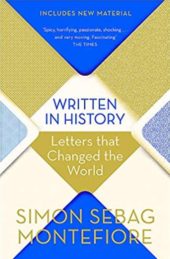
How did your experience as a war correspondent influence your work as a historian?A lot. It’s been a real help. It has been a great way to see the scene on the ground. The armies moving and empires falling. The espionage that comes with a sort of breakup of power. That’s what I’ve written about in my whole life, right? So that’s why it’s been hugely valuable and important. I toured wonderful countries and met wonderful people. I also saw many tragic things, but overall it was a very happy time in my life, strangely. Because I was single, I was alone, and when you’re single and alone and travelling, you can penetrate worlds, and that’s a brilliant thing. That’s what you have to do. It was very interesting.Did it also help with the actual rigour of writing and honing your craft as you worked your way through the material at your disposal?Well, it’s not the amount of material, because when you’re a correspondent there’s very little material. It’s a totally different thing. Correspondents are often not very good at handling anything more. But it is very good for neat writing, and sort of descriptive writing, and also I guess, writing fast. I think, mainly what it’s good for, is knowing what makes a good story. And also getting it. There’s detective work to get it. A lot of my big books of research like Catherine and the two Stalins, which were the ones I had lots of original research for and there was a lot of detective work.There has been a considerable amount of interest and work around the Soviet Union, the Russians. Do you think it’s possible to ever have a similar body of work happening around China? Do you think China could ever be the new Russia?Yeah, but you have to have archive material, and I’m sure there are huge archival materials. People like Jung Chang ( author of Mao: The Unknown Story) for example, she obviously had someone in the archives who could give her something, but no one has really worked on their archive, they haven’t really been open now, as the Russian ones were. And for a while, they may never be. But on the other hand, of course, yes. China would be fascinating. I wish that would be opened up.At one of your sessions you spoke about access and how it is so crucial to writing historical books and research. Especially when it comes to valuable assets like letters and correspondence. There’s also a kind of expectation that comes in when you are approaching the subject, a certain objectivity. How difficult is it for you to maintain that, when someone hands you a personal letter? They’d expect a certain point of view, isn’t it?If it’s a family, you’ve got to be a little careful. But actually, I haven’t really held back in my writing, even Stalin. I’ve been pretty frank with everything. And yeah, I got into a bit of trouble. You have to try and risk everything to get it, and then risk writing what you think. That’s the only way. And you have to be passionate about the subject. You have to really be immersed in the subject and be ready to do anything to get it.Quite a few of your works are being adapted for digital platforms and films, especially Jerusalem. Do you think digital platforms have rekindled an interest in history?Yeah, it’s good for history. Though many of these historical films are so bad, a lot of them are appalling, and of course they’re very inaccurate. You don’t get real history from a TV series, but yeah, I think it is a great thing that they have. Also, it’s bringing new stories to new people, and that’s exciting. But accuracy is everything. One has to remember that history is just about getting to the truth. Or some definition of the truth. Something near the truth. [That’s] what you’ve got to be careful about [with] documentaries. Writers attempt to tell a better story. Dramas attempt to invent a totally different reality.What is your opinion about the challenges of writing objective biographies in India? Especially since we are governed by the belief that one “must never speak ill” of the departed and the political ramifications that come with every biography that is commissioned?It would be difficult wouldn’t it? It would be difficult because you still have a great respect for these families and private lives are not written about. I think to get a picture of a person, especially someone who’s got great power, the personal is very important. I mean, you only have to look at the careers of Nehru, Indira Gandhi and Rajiv and so on. All of these personalities and the people around them have made a huge difference to modern Indian history. Which you can understand by examining their personal [life]. So, that’s kind of relevant. It’s the only way you can really make an objective judgement about some people who died a long time ago.You were talking about how one must understand the personal if one wants to understand the personality. Your book, Letters that Changed the World gives us an insight into the personal and the public. And the love letters, for instance, are a more intimate personal exchange.The book is really just to tell people of stories they should know, of characters they should know about, first and foremost. So there’s something from each of the Great Wars, there’s something about France and America and South America. There’s some Indian moments in there. There’s a variety. There are great letters of statesmanship like Babur, for example. And then there are fun love letters of Napoleon or Nelson, but also, there are letters about politics and power and stuff. There are letters in there that are at the start of World War I by Roosevelt or Churchill. I chose the letters that I thought were either essential or fun or revealed something about the consciousness, I mean, Michelangelo for example, and it’s obviously fascinating and entertaining, but it is also an amazing letter, and it’s about the greatest work of art, really. I love Balzac, so I put Balzac in there, because he’s novel. And Frida Kahlo was the woman who invented the woman as an artist. All the letters, actually did change the world somehow.Some of them were meant to remain in the private domain, but now they are not. So when you say that these letters were meant to change the world, what you’re trying to say is that these relationships changed the world…Yeah, or their art changed the world. But it’s basically about how people should know who these people are, and I read the things very carefully, to kind of tell who they are and why they’re important. And the letters are entertaining, and I sometimes arranged them in humorous sections.Basically I chose them with my daughters. They signed me up to do letters and speeches – speeches is coming out in October – and they called me and asked me about the letters, “Where are they?” So I went with my daughter, Lily, who’s 17, into my library, and we chose lots of letters. She photographed them, and it was really fun doing it with her. That’s how I chose it.Often, there are fun ways of doing serious things. For example, the letter from Mark Antony to Augustus, about Cleopatra. It really is a fun letter, and it’s about the future of the whole Western world. So I guess that’s the perfect encapsulation of what I’m trying to do with the book.History has always been taught as a function of who, what, when. Your work explores the why. Do you think it is high time we changed the way history is taught in schools?I do, actually. It gets very boring. I think that people should make it an analysis, even in high school. Because it is destroying originality, and the intelligence of students.History should be revisited and rewritten. History is very fashionable. And often, one has to question conventional wisdom. For example, an Indian columnist in The New York Times just wrote that Brexit and the Partition of India were kind of similar. And that is a very glib approach to history by public school boys with an absolutely shallow and narrow approach. Because [as] an Indian writer he’s only interested in criticising the English ruling class, not realising that all countries were incompetently run. All empires made huge mistakes as they crash.

June 2017You are primarily a Russian historian and in 2016 published your book ‘The Romanovs’, the story of twenty tsars and tsarinas who were the most successful dynasty of modern times. Why did you write ‘Jerusalem: The Biography’ when all your other work is on Russia?My Italian Montefiore family are Sephardic Jews with a special relationship with the city. My family motto is ‘Jerusalem’. My ancestor Moses Montefiore went and founded the new city of Jerusalem in the 1820s to the 1860s. He built the Montefiore Windmill which is still there. I have been brought up going to Jerusalem, and I always wanted to write a history of Jerusalem. The book is a love letter to Jerusalem, a special thing to do.Why do you tell the story of Jerusalem like the story of a woman who is loved and abandoned and loved again?We love that imagery. In the Torah and the Talmud, Jerusalem is sometimes portrayed as a beautiful woman wearing scarlet robes.What do you think should happen now in Israel and Palestine?I believe in a two state solution. Jerusalem should be the shared capital of both states. My book is very even handed. The extremists on both sides hate it because it recognises the full histories of both peoples. You can’t gain trust without understanding the full narrative of the other side.Do you think there can soon be peace?You need new leadership on both sides. The Netanyahu government has no intention of making a peace deal, you have the unelected octogenarian Mahmoud Abbas with Fatah, you have Hamas. The clock is ticking and if Israel doesn’t make a deal soon there will be a one state solution with a majority of Palestinian people in the Jewish state.Can President Trump help to make a peace deal?No, I don’t think he has a clue, but it is interesting to bring the Sunni Gulf monarchies into the peace process.‘Jerusalem: The Biography’ was a family matter for you, and then you returned to the subject of Russia with ‘The Romanovs’. Is Russia also in your blood?I love writing about Russia, and first of all for family reasons. In 1846 the same ancestor Moses Montefiore went to intercede against persecution of the Jews with the Tsar Emperor Nicholas 1st. Nicholas said to Moses, “If all the Jews were like you, it would be easier to be tolerant of them.” A highly patronizing comment!Did you make a formal study of Russia when you were younger?I studied Russia at Cambridge University, and was fascinated by Catherine the Great and by Stalin. In ‘The Romanovs’ I wanted to explain the exceptional nature and character of Russian power. I take it right up to Trump, who wants essentially to be an American tsar.Was it difficult to cover this vast expanse of Russian history in ‘The Romanovs’?The book handles it with a narrative, sequential story of how power worked over three or four hundred years. I wanted to explain the family, power, culture; all fused together. It was a difficult project to write a history book that also could be read by anybody, a saga of power, murder, intrigue, adultery, conspiracy and all the rest.Do you write history as if you are writing a novel?I always start with a Prologue to introduce atmosphere in a cinematic way and show the essential themes of the book, which I want to be academically correct and based on original archival research. I want the book to be literary and beautifully written, if possible. I am an independent writer, unattached to any institution, but I take the academics very seriously.How well do you know Russia?have been there a lot. Funnily enough ‘Catherine the Great and Potemkin: The Imperial Love Affair’ is now being republished in Russia, titled as ‘Catherine the Great and Potemkin: Conqueror of the Crimea’. And by the way Angelina Jolie is making a movie of the book in which she will play Catherine.What difference do you see between Putin, Stalin and the tsars?Putin is a fusion, a hybrid of Romanov Emperor, Stalinist General Secretary and modern 21st century politician. He deals in the world of television, of internet, of asymmetric warfare, and he is a master of very modern things, but many of his entourage call him ‘The Tsar’. He reads biographies of Romanov Emperors. I know he read my Catherine the Great book because in 2002 he discussed it with George W. Bush on the trip Bush made to St Petersburg.Do you think it is correct to call Putin a modern day tsar?The way the Putin entourage works is very similar, almost interchangeable if you put aside intercontinental missiles and digital warfare and look at the person. You have a tsar, a tiny entourage, completely opaque secret decision making – with vast fortunes and power delivered to people and taken away – and the desperate attempt of the single ruler to balance all these decisions and pressures. It is very similar to the way the Romanov court and Stalin’s court worked, and Putin is very aware of those two highly prestigious legacies.Do these legacies affect Putin’s ideology?He’s not really ideological. He looks at successful rulers of the motherland. Successful tsars for him would be Stalin, Nicholas I, Alexander I, Peter the Great, Catherine the Great; and unsuccessful ones for him would be primarily Gorbachev, slightly Yeltsin, definitely Nicholas II and Alexander II. He is interested in the success or failure of state power in Russia.Would you say that Putin rules the Russian state with total power?From the outside we look enviously at the swaggering strongman who can make any decision. Putin is President Trump’s dream character. Trump’s crush on the idea of Putin is partly the childish hero worship of this real estate magnate with a huge inferiority complex, who looks across and sees this leader with proper machismo and thinks: ‘God, in politics that’s what I want to be. He can do what he wants, isn’t paralysed by democratic procedures and a legislature that can’t decide anything.’ We don’t understand that Russian rulers are deeply insecure. In a system with no checks and balances, no boundaries, no restraint, they can do what they like on paper, but in actual fact they are very vulnerable.What is Putin’s vulnerability?One of the lessons of these Russian history books is that their rulers are most likely to be killed by their own courtiers and have to exist in a permanent state of ferocious vigilance. Looking from the inside, Putin is afraid every day about what could happen to him in the future and how to keep power for him and his small group.Do you think Trump is in real trouble because of Putin?Yes. My belief is that the Trump/Putin affair, the American/Russian scandal with links to Trump, is the greatest triumph of Russian intelligence in all of history. No Russian spymaster could achieve in their dreams the idea that Russian intelligence could separate and alienate the American presidency from their own security apparatus, which is amazingly what’s happened. They have partly paralysed American power. It is a great success for Russian spy craft.Would you say that Russian spy craft is very sophisticated?The Russians are super-sophisticated at understanding the internet for political manipulation. It’s ironic that what was invented in Silicon Valley by American ingenuity has been much better used by the denizens of a totalitarian system.Did Putin’s background in the KGB help him to outwit the Americans?Yes, they will be congratulating themselves on this. Putin is shrewd. Chosen almost at random by Yeltsin’s entourage, he is someone who has turned out to be a highly skilful opportunistic player, expert at exploiting the weaknesses of western democracies, which sadly today are plentiful. Someone who made their name in American reality television has been eaten alive by someone who has survived in the Kremlin almost 20 years.Did the Russians really think that Trump would win?The Russians were interfering in the elections, but thought that Hillary Clinton would win. Their aim was to undermine her Presidency as much as possible. The hilarious thing is that they would presume that if Hillary Clinton was the establishment candidate she would win. They think everything is fixed.How much longer do you think Putin can last?Another 20 years. Their great fear is people power like the Arab Spring happening there. If you talk to top Russian people, the thing that really spooked them was the killing of Gadhafi, because he was a leader who had been the established government of that country, backed by the Soviet Union for 30/40 years, suddenly just ripped to shreds on television. The only leader in the whole of modern Russian history who has been overthrown by popular protest was Nicholas 2. All the rest were killed by their own people or terrorists. In Russia once you have complete control of the security apparatus it’s quite difficult to overthrow a leader, but that’s their great fear anyway.Is the world in a more troublesome period than usual?It has always been unstable. I don’t really buy into people who say this is like the 1930s again. History never repeats itself anyway. The present is a fusion of different strands of the past. Mistakes repeat, but it’s always a fusion of the present too which makes it unique.Can history really help us better to understand what is happening?The more you know history the more useful it is, but it has to be a breadth of history. George W. Bush 2 loved reading history but he only read World War 2, Munich and 1940 and 1941 sort of history. So to him every foreign leader seemed like Hitler! We have to be careful. Generally Hitler parallels are a bad idea, especially for politicians.What is your role as an historian?To inform and to warn of dangers in the future, but also to entertain. When you look at the totalitarian century of blood that was the 20th century, society gets used to unacceptable things. That’s how the Holocaust happened. I’m not comparing Trump to Hitler, but what you see in American politics today is people getting used to things that should be unacceptable. Newspapers like the New York Times have a big role in keeping people aware of where things can go. The historian, the writer’s duty is to inform, to undermine, to question, to warn of the past.Is the change and uncertainty we now experience a part of the democratic process?This is a key point, which is which is why I’m not so alarmed at the moment. Democracy is designed to avoid violent revolutions by absorbing the dramatic changes of popular will. That is actually what’s happening. A lot of people can vote for Corbyn, for Donald Trump, for Macron, and throw out all the predictable candidates. That means democracy is still functioning.In Russia they’re not used to this kind of change?They regard periods of instability when new orders are emerging with absolute panic, and they immediately return to the old way of doing it.Is it the case that, whatever else happens, above all they don’t want to be invaded?Russia has no natural frontiers so Russia always feels hugely unstable. To us, looking at it from the outside, there’s always been this fear of a Russian bulldozer. In 1940 the Bolshevik hordes for the Nazis for example. In 1814 we were afraid of Russia dominating Europe when they made it to Paris, and now we’re obsessed Russia is going take over all our Internet and undermine everything. We have an instinctive fear of the East, while they’re terrified of being invaded and undermined.Isn’t Russia itself a cultural hybrid?It’s an empire and a collection of different peoples, that’s its fascination. In the early 90s I was a war correspondent in Georgia and Azerbaijan, where Russian power was suddenly vanishing. I was with all the warlords, a very exciting time for me.Do you still write fiction?I’ve just published ‘Red Sky at Noon’, the novel that completes my trilogy about a Jewish family in Russia in the 20th century. The first book is called ‘Sachenka’, the second ‘One Night in Winter’, and they are all being made into TV dramas or movies. I’m going to write a movie script, which is a new thing.Do you prefer to write fiction or history?I like writing fiction the most because I like to create characters. History is a huge task mentally, an almost physical intensive toil. Everything has to be correct, and if I’m doing one of these history books I literally immerse myself in the period.What is your next subject?I feel that with my body of work as an historian I’ve done enough on Russian monarchs and Russian dictators. If I’m going to do any more history it needs to be something fresh and completely different. Probably something more in the New World than the Old World.Do you feel that to be a writer gives you prestige in today’s world?From here we look at Italy and think that writers like Calvino are so respected, and everyone in the world wants to be a French writer because there you’re a star and they have the whole idea of intellectual prestige. America and France are the two places to be a writer. Here we have no prestige at all!

What first attracted you to the period you work in?I came to it after quite a long ramble through other periods, beginning with a childhood fascination with Ancient Rome (I loved the helmets), followed by Medieval Europe (knights in armour, castles, cathedrals), the early 17th century (Cavaliers, The Three Musketeers) and the Napoleonic Wars (cavalry charges and uniforms). And there was the ever-present fascination with World War Two; I grew up amid veterans, in a London pock-marked by bomb-sites, watching films like The Dam Busters.It was not until I began research for my biography of Chopin that I became aware of two things that had never struck me before. The first was that everything going on in Europe during his lifetime, be it in the field of politics, culture or ideology, was profoundly inter-connected and part of a process that could be traced back to the beginning of the 18th century, one which would transform the western world. The other thing that struck me was the abundance of primary sources, including very intimate ones.The European Enlightenment and the reaction to it which gave rise to the Romantic Movement involved educated people all over the Continent in the re-evaluation of every aspect of life, both public and personal. The first third of the 18th century witnessed a surge in literacy, particularly among women, an increase in the production and falling cost of paper, and the spread of regular postal services. Taken together, these three developments encouraged the writing and publication of an increasingly wide variety of books. They also encouraged letter-writing and the keeping of diaries. Until the self-consciousness and solemnity of the mid-19th century closed in, these letters and diaries were remarkably candid, and they provide not only a wealth of detail about people’s daily lives but also a trustworthy insight into what they thought and felt. Since most educated Europeans read the same books, which were published in large numbers in many languages, we also have a unique insight into how those thoughts and feelings were formed.Can you tell us a little more about how you research? Has the process changed over the years?The way I research obviously depends on the subject. When researching The Forgotten Few and Warsaw 1920 I was able to interview many participants and eye-witnesses – and found myself wishing I had started work on them years before, as I would have been able to interview so many more. In the case of Holy Madness and 1812 a major resource were printed memoirs, diaries and letters. For all my other books I worked mainly in archives, in several countries. This has become much more difficult and less enjoyable in recent years, as there is less and less access to the documents themselves. And there is nothing like handling the real thing. Looking at the minutes or memos written down at one of the meetings of the Congress of Vienna held in archives in, respectively, London, Paris, Vienna and Prague sheds invaluable light on what actually took place. Reading a document online or, what is worse, on microfilm, can be very misleading. And in the case of the archives of the Quai d’Orsay the poor quality of the microfilms I looked at for Phantom Terror meant some of them were quite impossible to decipher. When I asked to see the originals I was told I must write to the Foreign Minister and await authorisation, which would take weeks to obtain.The common phrase is that history is written by the victors. Do you think this is true?Very much so. The case of Poland and East-Central Europe in general can serve as a perfect example. Throughout the nineteenth century the historiography of the region was dominated by the imperial German narrative which made out that the whole area was populated by culturally inferior peoples incapable of building or sustaining viable polities and cried out for the civilizing dominance of its western neighbour. Another example is the representation of the Bourbon Kingdom of the Two Sicilies as a grotesquely backward state following its annexation by the newly-united Italy under the House of Savoy. And there is no lack of others.But there are also highly successful counter-narratives which lend quite unwarranted prestige to the defeated, the most notable example being the enduring glorification of the Habsburg Empire as a benevolent and harmonious multi-ethnic polity.Which historians who helped shape your career?At my dysfunctional prep school in London the History Master, Mr Atkinson, had absolutely no qualifications whatever, and as far as I can see based his teaching on Our Island Story. But his somewhat romanticised view of Britain’s past glories did fire my imagination and inspire a lifelong fascination with the past. He was also a collector of almost anything old and a keen observer of detail; he took me mud-larking for coins, clay pipes and other artefacts in the Thames at low tide, and he taught me to observe different styles of street furniture, fanlight and coal-hole cover, or things like old insurance company plaques on buildings as I walked around London. Spotting tell-tale detail is as important in trawling through old archives as in dating old buildings.None of my subsequent History masters were particularly inspiring, and it was on account of the dreariness which I encountered in tutorials, seminars and lectures when I went up to Oxford that I decided to switch to Modern Languages. This was, counterintuitively, the best thing I could have done as far as my career as a historian was concerned. I spent the next three years reading the whole of French and Russian literature, which together embody the development of ideas and attitudes throughout the western world from the sixteenth century to the present day and help to explain why people behaved as they did. And the study of old texts in French (which was the language of international discourse until the end of the nineteenth century) gave me a vital advantage when it came to research, even over a modern French-speaker.Although he never taught me, I owe a great deal to the late Norman Stone. I only met him after he had written an enthusiastic review of my biography of Stanislaw Augustus, The Last King of Poland. I was immediately captivated by his wonderful sense of humour and above all of the ridiculous, and we became firm friends, sharing many outrageously bibulous moments. He not only encouraged me in my work – which was important as, not having an academic post, I was considered something of an amateur by some of my peers – he also endorsed my approach, which is to see all historical figures and indeed events as fundamentally rather farcical, even if they result in tragedy. He was a virulent enemy of solemnity, pomposity and cant, which only serve to obscure what really took place behind the scenes of those great moments described in elevated prose and immortalised in grandiose paintings or staged photographs.If you could add any period or subject to the history curriculum, what would it be?To my mind, the fundamental problem is that from the earliest age pupils are taught the history of England, France, Spain, Italy, Germany and so on without any qualification as to what is meant by those terms. The teaching of English history does include quite a bit of that of Rome, but hardly any of the Danes, Saxons, Vikings, Normans, French, Dutch, Jews, and more recently Indians, Asians, Afro-Caribbeans and Africans, all of whom have made mighty contributions to it – not to mention that of Britons who travelled or lived in other parts. And in the case of Britain we are at least talking about an area whose borders, defined by sea, are specific. But what of Germany or Italy, which, as Metternich famously put it, was nothing but a geographical expression until 1870, or France, which in 1789 was smaller than it is today yet no more than some twenty-five per cent of whose population spoke French?The fact is that no ‘nation’ and no ‘country’ has ever been an island and ever since mankind evolved on this planet there has been a process of globalisation, with people moving around, spreading their influence genetically and intellectually. The curriculum should accommodate this. Not merely as a gesture to the multi-ethnic origins of the pupils of today, but as an essential recognition of the influence of earlier, historic interlopers.I grew up having to accommodate the world-view of my Polish home with what I was taught at my English school, while holidays with French cousins confronted me with a completely different set of assumptions. As a result, I was obliged to look at the history of each of those three nations from three different perspectives, a habit that has served me well as a historian. When studying, say, the Tudors, it should be obligatory to consider how England was viewed from Paris and Madrid, and indeed Rome. People should be taught to look at events not from one side of a national border but from the clouds above.