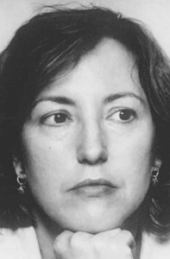

Welcome to Aspects of History, Jemahl. What first attracted you to the period or periods you work in?
Ha, well, technically I am a medievalist, at least by training, but the 17th century has always fascinated me. The initial spark for my character, Sir Blandford Candy, and the idea of the life of the last Roundhead came to me during a Year 8 lesson. We were finishing the topic at the Restoration, and it was the last lesson on a Friday, and a young lad decided to distract the class with excessive questions. The problem being, his questions were very good. I ended up telling them about William Hiseland, the historical last cavalier. Born in 1620, Hiseland started his ‘alleged’ military career at Edgehill (1642), and ended it with Marlborough at the Battle of Malplaquet (1709). One of the first Chelsea pensioners, he had to leave after getting married at the age of 103, and lived until 1732!
As the class trailed out, perfectly happy at the lack of work actually achieved, I started wondering about the last Roundhead, and what might have happened to him…
Can you tell us a little about how you research? Has the process changed over the years?
Research is my favourite part of the writing process. I tend to start with a narrative history to give me an overview and then start drilling down into actual sources. Early English Books Online is a great resource for the masses of printed sources from the period. My Blandford novels deliberately use transcriptions of news articles interspersed with the narrative to give a picture of the wider war, so I am always on the lookout for a juicy story. That’s the difference between writing fiction and actual history. As an historian, I am interested in change and why it happened. As an author I just want to entertain, so it’s the little stories that tend to grab me.
The common phrase is that history is written by the victors. Do you think this is true?
No. The first accounts are written by the victors. History is written by historians, and I don’t think there is an historian worth their salt who doesn’t understand the bias of victors’ accounts.
Are there any writers or historians who helped shaped your career? Similarly, can you recommend three history books which budding historians should read?
Professor Steve Church was my tutor at undergraduate, probably the UK’s expert in everything King John, and he was an absolutely wonderful man and teacher who instilled a deep love of the subject and the medieval period. I wish I had been a better student under him.
For budding historians, I would recommend Elton’s The Practice of History before reading Carr’s What is History?. I’d finish with Gibbon’s Rise and Fall. After that you have the tools you need to start, I think.
If you could meet any figure from history, who would it be and why? Also, if you could witness any event throughout history, what would it be?
I’d love to have met George Harrison or see the Beatles in Hamburg, or a Shakespeare play in the Globe, or Nell Gwyn at the Cockpit, or Tartuffe with Molière playing. The big cultural moments would be amazing to see, and they would be first on my list if I had a TARDIS.
If you could add any period or subject to the history curriculum, what would it be?
Well, the 11-16 history curriculum is rather jampacked as it is… There are a lot of topics that frankly we could do without, but that’s a political football most teachers actually don’t want to touch. I personally would rather find a way of getting students to read more history, and to learn how to think critically about sources rather than throwing them more Romans, or god forbid more Henry VIII and Hitler. Getting them reading is the key to everything.
If you could give a piece of advice to your younger self, either as a student or when you first started out as a writer, what would it be?
Write every day, even if it’s only a few sentences. The habit becomes ingrained. The first draft is always terrible, keep going.
Can you tell us a little bit about the project you are currently working on?
I’m currently researching and planning the next Blandford Candy book. It’s a return to the first-person narrative and personal story of the old man, after a digression with Bedlam. The book opens with Charles I’s arrest at Holdenby House and covers the Second English Civil War. I am deep into the siege of Colchester (1648) and Arthur Capel’s execution at the moment.
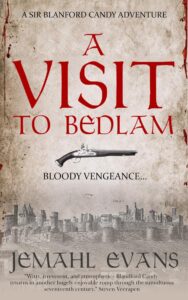
Jemahl Evans is a historical novelist based in Wales and the author of A Visit to Bedlam, the latest in the Sir Blandford Candy Adventure series.